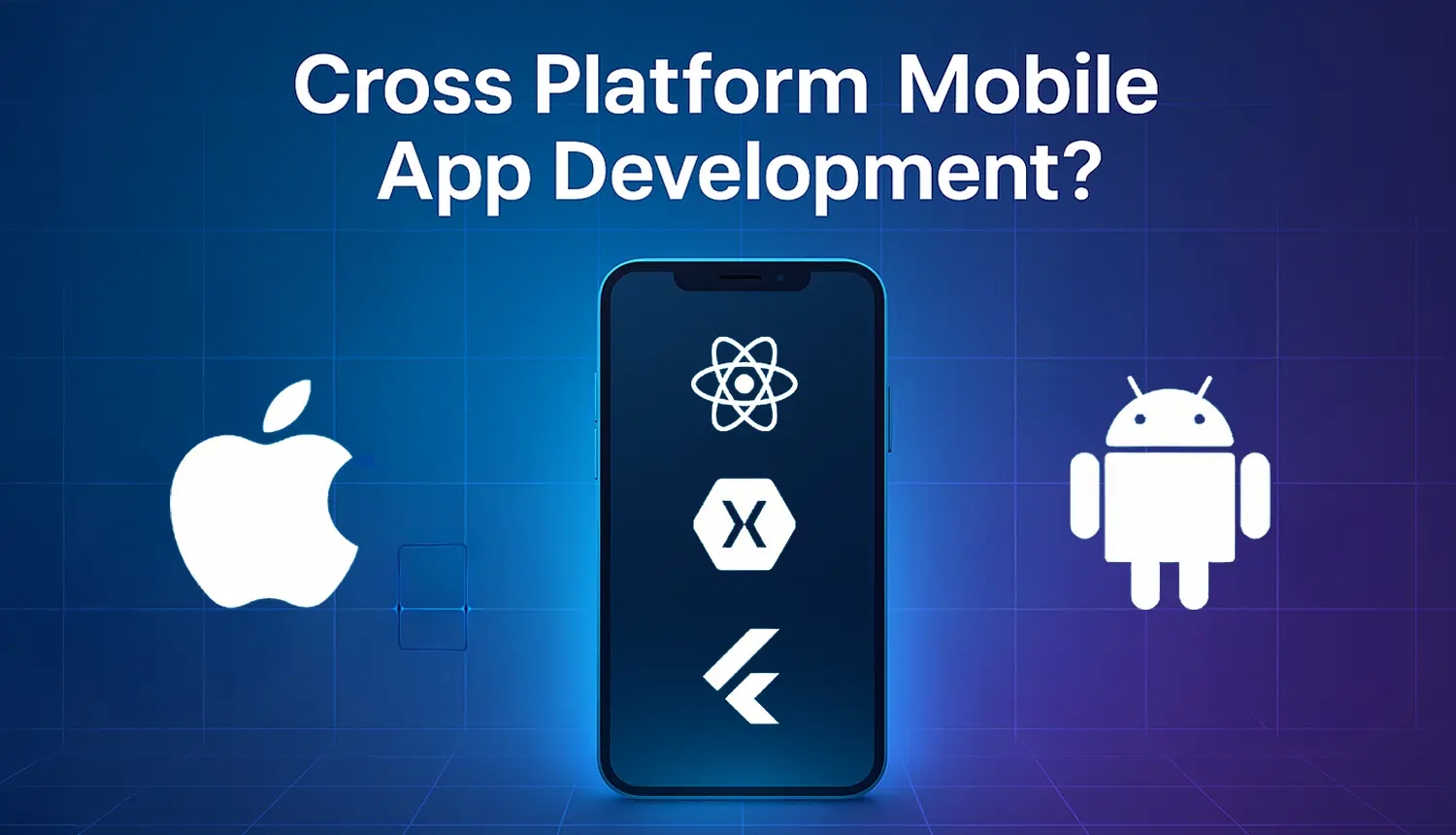

The rise of cross-platform mobile app development has led to a surge of new tools and frameworks. Its popularity stems from the ability to build apps for multiple platforms efficiently. However, with so many options available, developers often struggle to choose the best framework.
A cross-platform app development framework allows developers to build apps for multiple platforms using a single codebase. It saves time and effort by eliminating the need to write separate code for each operating system. This approach enables faster, cost-effective development and broader audience reach.
Mobile app development has transformed business dynamics over the last couple of decades. While businesses aim for global reach through mobile apps, developers rely on cross-platform frameworks to achieve this efficiently. These frameworks serve as the versatile Swiss Army knives in a developer's toolkit, saving time, cost, and effort by streamlining iOS and Android development.
As demand for the tools has been increasing lately, more frameworks appear on the market, each equipped with its own feature. With all of these options available in the market, which one should you use for your project?
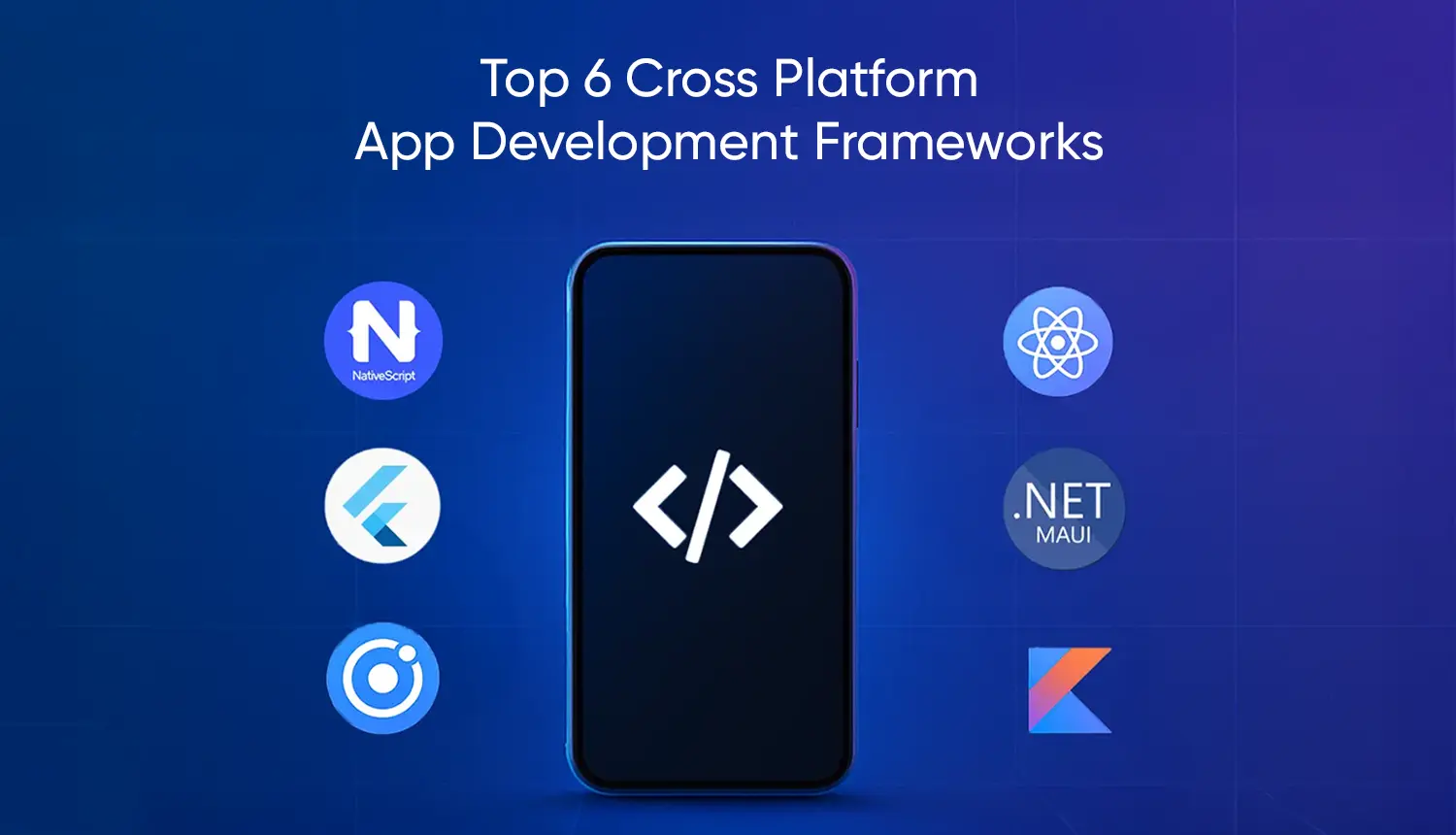
These top 6 cross platform app development frameworks of 2025 will help you choose wisely.
Let's find the right framework to build a high-performing, versatile app!
What are cross platform app development frameworks?
You might have come across multiple cross platform app development frameworks to date, but this list is not exhaustive. Here we have enlisted only those that have already been used to power gigantic IT projects.
Cross-platform application development frameworks allow building native-like applications for multiple platforms from a single codebase. That is, the code written will be compatible with all systems, so separate coding is not required. Thus, there will be only one platform on which apps will run on all the systems This approach is adopted by top companies as it is cost-effective and versatile in the app development industry.
Cross-platform development companies specialize in developing smooth, high-performance applications that run across various operating systems. They eliminate native development complexities while making the process easier for businesses to reach a wider demographic in no time.
6 Cross Platform App Development Frameworks
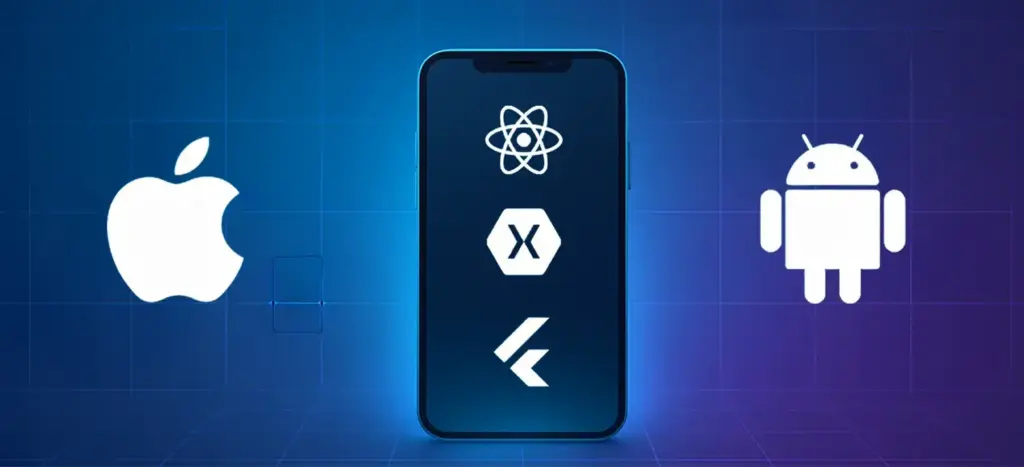
Multi platform mobile application development can make your business profitable in most ways. But only finding the right technology will serve the purpose. Here is the breakdown of the top 6 cross platform mobile app development frameworks for you to consider:
1. Flutter

Flutter is an open-source UI development framework launched by Google in 2017. Its main feature allowed developers to build native-like applications from a single codebase on Android/iOS and many more platforms. It is developed natively and is very cost-effective making it popular among developers very quickly.
Features of Flutter
- Real-Time Code Updates with Hot Reload: Instant feedback on code changes allows developers to refine and test new ideas quickly without restarting the app.
- Extensive Widget Library: A diverse array of customizable widgets supports both Material Design and Cupertino design, facilitating the creation of visually appealing, native-like interfaces for Android and iOS.
- High-Performance Rendering Engine: Equipped with a powerful rendering engine that handles advanced graphics and smooth animations. It ensures consistent performance without relying on web technologies.
- Automatic UI Updates with Reactive Framework: The reactive framework refreshes the interface automatically when data changes, enhancing user responsiveness without manual updates.
- Streamlined Firebase Integration: Effortless integration with Firebase provides essential back-end services. This involves data storage, user authentication, and analytics for feature-rich apps.
- Efficient Cross-Platform Development: A single codebase for both Android and iOS reduces development time and cost, making it ideal for Minimum Viable Products (MVPs) and rapid prototyping.
- Unified Graphics Engine for a Consistent UI: The built-in graphics engine ensures a smooth, high-quality visual experience across Android and iOS without separate interface designs.
2. React Native
React Native, an open-source framework for UI applications was launched by Meta Platforms once known as Facebook in 2015. Built on the JavaScript library React, it allows developers to share codebase for all types of mobile platforms for high performance and native appeal.
This framework provides native mobile development features seamlessly integrated with platform-specific components. Primarily built for the development of mobile applications on Android and iOS. React Native is a versatile tool in the efficient, scalable, and cross-platform mobile development field.
React Native’s latest version 0.76 introduces several performance improvements and now supports Android 14 and iOS 17. This upgrade includes new features and bug fixes, making it more robust and efficient.
Features of React Native
- Fast Refresh: Provides instant real-time code changes without restarting the app, significantly enhancing developer productivity.
- Native-Like UI Components: Renders React primitives as native platform UI components, enabling customized and responsive designs for a seamless user experience.
- Hot Reloading: Facilitates quick code implementation, allowing developers to see results immediately without restarting the app, thus accelerating the development process.
- Vast Ecosystem of Libraries, Tools, and Frameworks: Offers easy integration and extension of app functionality for diverse development needs.
- Code Reusability: Supports writing code once and deploying it across multiple platforms, significantly saving time and resources in mobile app development.
- Multiple Language Support: Enables development in various programming languages, including JavaScript, Objective-C, Java, C++, and Python.
- Ready-to-Use Plugins: Provides a range of pre-built plugins that simplify development and enhance application functionality. This saves time and streamlines feature integration.
3. Kotlin Multiplatform (KMP)

It's an open-source technology for best cross platform app development introduced by JetBrains. Kotlin Multiplatform makes it possible for developers to share code specifically for cross-platform mobile app development. Launched in 2017, Kotlin Multiplatform (KMP) allows reusing business logic while supporting native programming for platform-specific implementations.
This flexibility accelerates development and reduces bugs by enabling seamless integration of shared Kotlin code into any project without enforcing a specific UI architecture development. With this, developers can apply native UI technologies to their cross-platform applications to acquire a native look and feel on Android and iOS devices.
Features of Kotlin Multiplatform
- Seamless Cross-Platform Code Sharing: Offers the capability to write and reuse code across Android, iOS, web, desktop, and server-side platforms without sacrificing the native experience.
- Interoperability with Native Code: Provides effortless integration with existing iOS and Android codebases. It enables teams to leverage their expertise while gradually incorporating cross-platform features.
- Compose Multiplatform for Unified UI Development: Compose Multiplatform is a modern declarative UI framework that delivers a consistent code-sharing experience for business logic and user interfaces.
- No New Language Requirements: Ensures that existing Kotlin developers can transition to Kotlin Multiplatform without the need to learn a new language.
- Robust Gradle Support: Integrates seamlessly with Gradle, enhancing efficient dependency management and streamlining project builds to boost overall development productivity.
4. NET Multi-platform App UI (.NET MAUI)
One of the top cross-platform frameworks released by Microsoft in May 2022, designed for creating native mobile and desktop applications using C# and XAML. As an extension of Xamarin.Forms provide the latest and modern approach to architectural design by the development for faster improvement and code sustainability.
.NET MAUI natively supports Model-View-ViewModel (MVVM), Model-View-Controller (MVC), and Model-View-Presenter (MVP) software architecture patterns. This free, open-source platform is available under the MIT license as part of Visual Studio. It enables developers to build feature-rich, cross-platform applications efficiently after the official support for Xamarin ended on May 1, 2024.
Key Features of .NET Multi-platform App UI (.NET MAUI)
- Cross-Platform API Access: Unified APIs provide seamless access to native device features such as GPS, accelerometer, and battery status across Android, iOS, macOS, and Windows.
- Single Project System: A single, multi-targeted project system simplifies project structure and streamlines development for all platforms.
- .NET Hot Reload: .NET Hot Reload facilitates real-time code modifications, allowing instant changes that enhance productivity through rapid iteration without needing to restart the app.
- Evolution from Xamarin.Forms: .NET MAUI builds upon Xamarin.Forms, offering an enhanced framework with improved support, stability, and functionality for cross-platform development.
- Unified C# Codebase: The platform supports the creation of applications across all target platforms using a single C# codebase.
- Compatibility with .NET Libraries: Access to powerful libraries, such as EntityFramework for database management, and utilization of native libraries enhance the framework’s versatility.
- Modern App Architectures: Support for various app architectures, including MVVM, MVC, and MVP, promotes improved code maintainability and scalability.
- UI and UX Customization with XAML: XAML enables intuitive and responsive layout design, with built-in support for styles and theming, ensuring a polished and consistent app experience.
- Component-Based Architecture: The component-based architecture fosters streamlined development workflows and modularity, enhancing development speed and code organization.
- Templates and Device-Specific APIs: A variety of project templates and device-specific APIs facilitate access to device hardware. Empowers the creation of feature-rich, responsive apps that deliver a native experience across platforms.
5. NativeScript
NativeScript enables developers to create native mobile applications for Android and iOS using JavaScript, TypeScript, or frameworks like Angular and Vue.js, facilitating easy cross-platform development. This framework excels at offering direct access to native APIs, thus allowing developers to utilize native UI components and device features, like cameras, GPS, and sensors.
NativeScript can host direct inclusions of all available plugins from NPM. This increases its strength and simplifies developing cross platform mobile apps. Progress established NativeScript, but later nStudio acquired it in 2019. With their combination, the framework is progressing better. NativeScript allows the developer to develop apps for both iOS and Android systems, thus creating true Write Once, Run Anywhere (WORA) applications.
Features of NativeScript
- Direct Access to Native APIs: Easily connect with Android and iOS APIs, fully leveraging device-specific features without needing extra native development knowledge.
- Platform-Native User Interface: Delivers a truly native UI, providing smooth performance and authentic interactions without relying on WebViews.
- Flexible UI Design: Adaptable design ensures that a single UI works across devices, while also allowing customization for specific screens and interactions.
- Built-In Plugins and Resources: Offers robust plugins to access device capabilities—like sensors and authentication—minimizing the need for third-party dependencies.
- Efficient Development with Angular and TypeScript: Uses familiar tools like Angular and TypeScript, speeding up development for web-savvy developers and simplifying mobile app creation.
- Performance Optimized Compilation: JIT speeds up development while AOT optimizes performance in production, ensuring smooth, responsive user experiences.
- LiveSync and Hot Module Replacement (HMR): Instantly see code changes on the device without restarting the app, saving time and streamlining the testing process.
- Multi-Frame Support: Supports multiple frames, enabling smooth multi-screen flows within a single application for complex navigational experiences.
- Corporate-Grade Adaptability: Trusted by companies like MongoDB, NativeScript proves versatile and reliable for diverse, large-scale applications.
6. Ionic
Ionic is an open-source tool developed for mobile UI for any app, launched in 2013 for building high-quality HTML, CSS, and JavaScript applications. Its has an easy codebase which enables developers to create native-like applications by using popular frameworks.
The intuitive design for PWA development allows you to add user-friendly features that make your application much better. The framework provides developers with the tools to access native APIs and SDKs so that their applications appear and feel native across Windows, iOS, and Android.
Features of Ionic
- SaaS-Based UI Framework with Extensive UI Components: Offers a rich collection of pre-built UI components and themes for developing visually appealing mobile applications.
- Web Technologies for Cross-Platform Compatibility: Utilizes HTML, CSS, and JavaScript to enable app development on iOS, Android, and the web, leveraging web development skills.
- Cordova and Capacitor Plugins: Provide seamless access to native device features and platform-specific capabilities, enhancing the overall user experience.
- Integration with AngularJS for Rich Functionality: Extends HTML syntax and supports dynamic components, making AngularJS an ideal framework for developing feature-rich applications.
- Command-Line Interface (CLI) and Live Reload: Features a streamlined project setup and management system, with live reload capabilities for real-time changes during development.
- Capacitor for Native-Like App Performance: Acts as Ionic's open-source runtime, offering native SDK support and ensuring applications closely resemble native apps in both appearance and performance.
- Component-Based Architecture and Reusability: Facilitates the creation of reusable and fully customizable UI components, simplifying the development process and ensuring consistent app design.
- Lazy Loading and AOT Compilation: Enhances application startup times and rendering performance across devices, providing a smoother user experience.
How to Choose The Right Framework? 8 Things to Consider!
- Evaluate your team's existing knowledge and experience with the framework to ensure smooth implementation.
- Choose frameworks backed by reputable companies or communities with a track record of consistent support and regular updates.
- Consider the framework’s maturity—more established frameworks often have fewer bugs and more community-tested features.
- Assess the security features and practices associated with the framework to safeguard your application from vulnerabilities.
- Look for available documentation, tutorials, and resources to help your team learn and troubleshoot effectively.
- Ensure the framework aligns with your specific project needs, including scale, performance, and flexibility.
- Consider the costs associated with the framework, including licensing fees and the potential need for additional tools or plugins.
- Factor in how quickly you need to launch your project, as some frameworks allow for more rapid development than others.
9 Mistakes to Avoid While Hiring A Cross Platform App Developer
The increasing complexities in mobile app development have made it difficult to hire a developer who can confirm all your needs. While most employers follow a thorough hiring process, they complain about unmet expectations. This results in terminations and causes delays in completion of tasks on priority.
- Avoid underestimating development time; set realistic timelines based on project complexity.
- Neglecting platform-specific knowledge may prevent the goals from being achieved. Ensure developers know the frameworks well and can optimize apps for iOS/Android.
- Don’t expect identical performance to native apps; aim for optimal efficiency across platforms.
- Avoid incomplete testing; it risks bugs, performance issues, and user frustration.
- Ensure seamless functionality; platform compatibility issues can harm user adoption and retention.
- Lack of framework expertise hinders complex functionalities and third-party API integration.
- Ignoring coding standards and best practices affects scalability, maintainability, and long-term app success.
- Avoid ineffective communication as it leads to misunderstandings, delays, and unaddressed project concerns.
- Never hire unverified developers; check certifications and project reliability for successful delivery.
Cross-Platform Mobile Development is Easier with BrainX!
Building cross-platform apps with BrainX is made simple and reliable with leading cross platform app development frameworks, allowing for a single codebase across iOS and Android. Our streamlined, agile development process combines design, development, and rigorous testing phases to ensure efficiency and quality. The experienced team at BrainX Technologies minimizes post-launch bugs and optimizes performance. We provide ongoing support and maintenance to keep apps updated with the latest features and security patches. Customized solutions ensure the apps align with specific business needs, enhancing functionality and user experience.