

 June 23, 2025 -
  9 minutes read

The Chief Technology Officer (CTO) role is no longer limited to technical infrastructure but has spread to leading strategic innovation. Traditionally, CTOs are being asked to lead digital transformation, guarantee solid application performance, and balance technology with ambitious business goals.
As the SaaS industry is set to reach $623 billion by 2025 (Statista), the need for scalable and high-performance solutions increases. To meet these demands, CTOs are increasingly adopting outsourcing as an integral strategy.
Well more than a tool for cost saving, outsourcing quicker access to highly skilled expertise that increases operational efficiency, and allows flexibility in dynamic industries. Whether working to fill knowledge gaps, accelerate development cycles, or manage integration complexities, well-planned outsourcing enables CTOs to tackle executive challenges confidently.
This blog highlights the challenges C-level executives face in the SaaS industry and how innovative CTO outsourcing strategies provide a model for lasting, effective leadership.
Who is a CTO & What are Their Major Responsibilities?

A Chief Technology Officer (CTO) is the backbone of any technology-oriented company, but not every CTO works the same. A CTO’s role varies depending on the company’s size, stage, and goals:
Traditional CTO vs. Innovation CTO vs. Fractional CTO
- Traditional CTO: This model tends to be concerned with keeping IT systems running, guaranteeing uptime, managing infrastructure, and keeping internal tech operations running. They are execution-oriented and usually found in organizations where stability is valued over innovation.
- Innovation CTO: This role emerged with the digital boom. Innovation CTOs are growth enablers, responsible for introducing emerging technologies, leading digital transformation, and innovating customer experiences through tech-driven solutions.
- Fractional CTO: Common among startups and SMEs, fractional CTOs offer high-level tech leadership on a part-time or contract basis. They help companies make critical decisions during early growth phases or transitions without the commitment of a full-time C-level hire.
- Digital CTO: A digital CTO is focused on using cloud platforms, big data, and AI to make customer-facing products and services more optimal. They blend tech strategy with business strategy and are usually seen in SaaS and Ecommerce firms.
- CTO as a Service (CaaS): Another developing trend is that CTOs provide consulting or advisory services in a package form, also known as CTO-as-a-Service. The Agile methodology benefits startups and non-tech founders by providing strategic planning, scaling the team, and MVP creation.
C-Level Challenges In Technology
Challenge 1: Bridging the Talent Gap
The talent deficiency in tech is a nagging problem for SaaS CTOs. According to a 2023 Korn Ferry report, the world will experience an 85 million-worker deficit of qualified workers by 2030, with software development jobs being among the most affected.
For CTOs, that translates to intense competition for engineers, skyrocketing pay rates, and extended hiring processes, problems that jeopardize product schedules and scalability.
Outsourcing Solution
Effective CTO outsourcing strategies, like offshore and nearshore development teams, access a larger talent base at competitive prices. Eastern Europe and Latin America, for example, provide qualified developers in time-zone alignment with North American businesses, while India remains a source of cost-efficient expertise. With outsourcing vendors, CTOs are able to easily call in experts and consider AI developers or DevOps engineers without the burden of direct hire.
Strategy
Set up specific roles for outsourced teams, bring them together with internal staff with tools such as Slack or Jira, and invest in cultural training to ensure cohesion.
🔎 Need to scale your dev team with vetted engineers? Explore our IT Staff Augmentation Handbook to see how flexible hiring models support your roadmap without long-term commitments.
Challenge 2: Keeping Up with Technological Developments
The SaaS environment is driven by innovations. AI, cloud, and low-code platforms are transforming customer expectations. CTOs have to embrace these technologies quickly, but internal teams don't have the bandwidth or expertise to test at scale. According to a study by Exploding Topics, 77% of business leaders believe digital transformation is a driver for growth, but just 40% think they have the skills to implement it.
Outsourcing Solution
Expert vendors offer leading-edge capabilities. For instance, outsourcing AI development to a company with established machine learning expertise can speed feature deployment—such as predictive analytics for a CRM SaaS product. Likewise, cloud migration specialists can make transitions to AWS or Azure more efficient, minimizing downtime.
Strategy
Vet vendors for technical expertise and previous success in your space. Employ proof-of-concept (POC) stages to pilot capabilities prior to full engagement, so as to ensure alignment with your tech roadmap.
Challenge 3: Balancing Cost and Quality
SaaS companies operate on tight margins, with CTOs tasked to deliver high-quality solutions without breaking the bank. In-house development can lead to ballooning costs for salaries, benefits, and infrastructure, while delays erode profitability. However, low-cost outsourcing can compromise quality, risking customer churn.
Outsourcing Solution
Strategic outsourcing strikes a balance. For instance, according to a Clutch report of 2024, nearshore teams in Mexico offer 30-50% lower rates than U.S. developers.
Nearshore teams in Mexico, for instance, offer rates 30-50% lower than U.S. developers, per a 2024 Clutch report, with comparable quality due to proximity and cultural alignment. Onshore boutique firms, though pricier, provide premium expertise for niche needs like cybersecurity.
Strategy
Negotiate contracts with performance-based incentives, cap costs with fixed-price models, and monitor quality via regular code reviews and user acceptance testing (UAT).
Challenge 4: Ensuring Security and Compliance
Breaches of data cost SaaS companies an average of $4.45 million per breach, according to IBM's 2023 report, while GDPR, CCPA, and SOC 2 compliance add complexity. CTOs need to protect customer data and satisfy regulatory requirements with minimal internal resources.
Outsourcing Solution
Security-minded outsourcing partners provide the expertise of encryption, penetration testing, and compliance audits. For instance, a vendor who is ISO 27001 certified will protect your SaaS platform against threats, and regulatory compliance is handled by legal experts.
Strategy
Prioritize vendors with good security practices—look for two-factor authentication and end-to-end encryption. Embed compliance checkpoints in project milestones to stay audit-ready.
Challenge 5: Scaling Operations with Agility
SaaS growth demands scalability—spiking user bases, new features, and global expansion. CTOs must architect systems that flex without fracturing, yet rapid scaling often strains in-house teams and budgets.
Outsourcing Solution
Flexible outsourcing models like staff augmentation or managed services, enable rapid scaling. A managed service can handle localization and support.
Strategy
Use modular outsourcing—short-term contracts for specific tasks—and integrate with cloud platforms like Kubernetes for elastic infrastructure. Test scalability with load simulations before launch.
Ethical Aspects of CTO Outsourcing
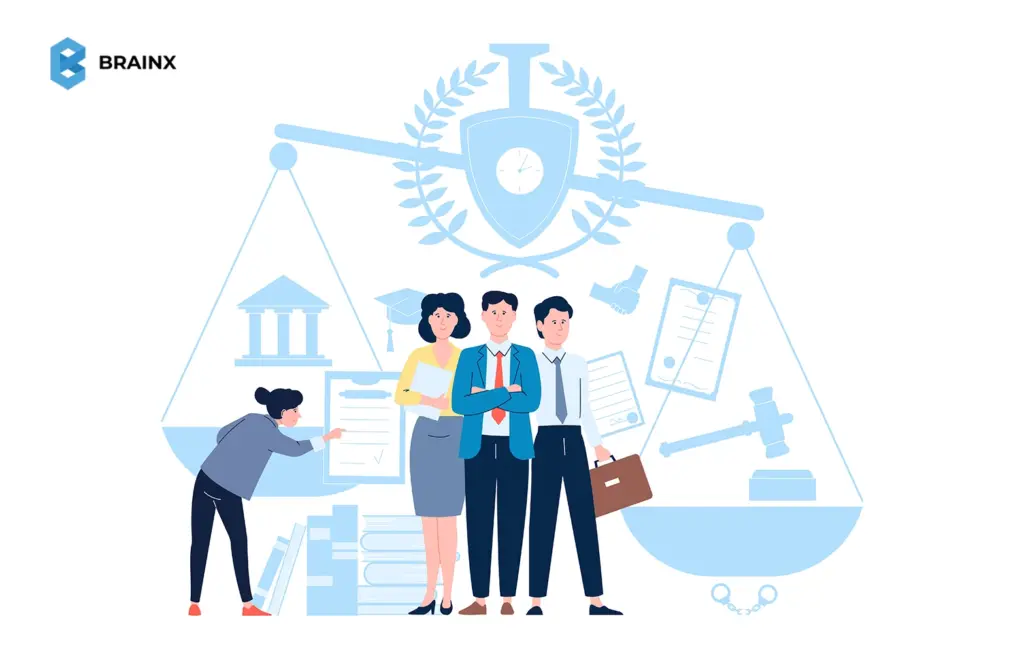
- Guarantee your outsourcing partner maintains fair labor practices and humane working environments.
- Select vendors dedicated to environmentally friendly operations and responsible resource usage.
- Confirm all data handling practices are in accordance with international privacy legislation such as GDPR, HIPAA, or CCPA.
- Prevent outsourcing partners involved in exploitative pricing, unpaid internship, or unethical subcontracting.
- Foster diversity and inclusion through collaboration with culturally sensitive, internationally respectful teams.
- Add transparency provisions to contracts to avoid hidden charges, third-party subcontracting, or IP abuse.
- Ensure outsourced AI/ML projects are not based on biased data sets, unethical surveillance, or user data abuse.
- Monitor for early warning signs of unethical behavior through periodic audits and third-party reviews.
Lessons from Failed Outsourcing Initiatives: What CTOs Can Learn?
Outsourcing is now a foundation of contemporary business practice, holding out the prospect of cost savings, access to expert talent, and efficiency in operations. For Chief Technology Officers (CTOs), outsourcing is an effective tool for speeding up development, ramping up operations, or dealing with complicated projects. But in its execution, it can also be a source of expensive delays, missed deadlines, and tainted reputations. By learning from recent case studies of failed outsourcing efforts, CTOs can extract important lessons to prevent mistakes and achieve the most success.
“For a deeper dive into outsourcing challenges, check out these 10 common mistakes businesses make while outsourcing software development.”
Below are four of the most recent examples from 2023 and 2024 with actionable takeaways.
1. Hertz vs. Accenture
Hertz selected Accenture in 2016 to develop a scalable custom platform for redesigning its website together with mobile apps for its customers. The conflict between Hertz and Accenture reached a peak of $32 million after the service provider was sued for developing a substandard product that showed poor scalability and delayed delivery without geographic adaptability.
What Went Wrong?
Misaligned expectations and communication issues damaged the project. Accenture purportedly overlooked Hertz's scalability requirements, and there was no defined road map to meet global standards of deliverables.
Lesson for CTOs
Define precise requirements and establish robust communication channels upfront. Use detailed contracts that outline scalability, performance metrics, and milestones. Regular progress reviews can prevent scope creep and ensure alignment with business goals.
⚠️ Want to avoid critical vendor mistakes like this? Read our guide to outsourcing software development mistakes and learn how to protect your timeline, budget, and delivery success.
2. Queensland Health Payroll System (IBM)
Queensland Health Department's IBM outsourcing of its payroll system, begun in 2007, is among the most notorious failures. It was originally funded for $6 million with a delivery in 2008, but technical problems ran costs up to $1.2 billion by project completion. The system failed to operate properly at all, with far-reaching check errors. Queensland excluded IBM from further government work in 2023, highlighting the long-lasting effect of this fiasco.
What Went Wrong?
What Went Wrong: Unrealistic timelines, poor risk assessment, and excessive reliance on IBM's brand name instead of its tested capability resulted in catastrophe.
Lesson for CTOs
Vet vendors beyond reputation assess their technical expertise and past performance on similar projects. Build contingency plans and realistic timelines that account for testing and iteration. Secure contracts with clear accountability clauses to safeguard against vendor underperformance.
3. PatientDox’s Offshore Overreach
PatientDox, a healthcare technology startup, sought to standardize patient communication by outsourcing development to Indian, Israeli, and Chinese teams. By early 2024, the startup dissolved under the pressure of expediting growth and managing its offshore teams poorly. Its CEO confessed that decentralized management and cultural incompatibility led to slippage and a product that didn't address market requirements.
What Went Wrong?
Excessive outsourcing in several geographies created coordination mayhem.
Lesson for CTOs
Scale outsourcing gradually and maintain strong oversight. Invest in cultural training and time-zone-compatible workflows to unify distributed teams. A single point of accountability can prevent fragmentation and keep projects on track.
4. Texas Data Center Consolidation (IBM)
In 2006, Texas contracted IBM for $863 million to consolidate 27 state agency data centers into two. By 2010, only 12% of the project was complete, causing backlogs and cost overruns. IBM repaid part of the funds, and the state switched vendors. In 2023, analysts revisited this failure, noting its relevance as hybrid cloud strategies make data consolidation projects increasingly common.
What Went Wrong?
IBM underestimated the project’s complexity, and Texas failed to monitor progress effectively. The contract lacked flexibility to adapt to emerging challenges.
Lesson for CTOs
Break complex projects into manageable phases with clear deliverables. Monitor progress with data-driven metrics and retain the flexibility to pivot vendors or strategies if needed. Understand the technical nuances of your initiative to avoid underestimating its scope.
How AI is Changing CTO Outsourcing Strategies

For CTOs, AI-powered outsourcing solutions are not just a labor solution, but a strategic, tech-first partnership. Outsourcing is no longer limited to manual coding, data entry, or testing. AI has enabled partners to offer intelligent, data-driven services such as:
- Predictive analytics
- AI-powered customer support (e.g., chatbots, virtual assistants)
- Automated QA and test scripts
- Natural Language Processing (NLP) for content automation
- AI model development and deployment
What’s Changing?
1. Automation: From Routine to Intelligent
Traditional automation handled repetitive workflows (e.g., CI/CD, infrastructure provisioning). But with intelligent automation, vendors now use machine learning and bots to:
- Detect anomalies in real time.
- Automatically scale cloud resources based on usage.
- Generate reports, track bugs, and suggest fixes.
- Reduce human error across systems and processes.
2. New Opportunities in Low-Code/No-Code Outsourcing
Thanks to platforms like Bubble, OutSystems, and Mendix, even non-technical teams can build apps. Vendors offering low-code/no-code development now enable:
- Rapid MVP creation
- Faster prototyping and iteration
- Cost-effective digital solutions without deep engineering teams
3. AI-Enhanced Communication & Project Management
AI is also improving how outsourcing relationships work. Smart tools now assist in:
- Auto-generating meeting notes and action items
- Predicting project delays based on historical patterns
- Recommending optimal team structures or timelines
- Real-time language translation for global teams
4. Balancing AI Adoption with Ethical Responsibility
With great power comes great responsibility. Outsourcing AI-related tasks means CTOs must ensure:
- Ethical data use (no unauthorized scraping or biased model training)
- Transparency in algorithm decision-making
- Compliance with AI governance frameworks (e.g., EU AI Act)
How CTOs Must Evolve Outsourcing Strategies in the Era of AI
- Select AI-first vendors: Seek out vendors who provide AI-driven services, not manual intervention.
- Reskill internal teams: Encourage collaboration between AI-savvy outsourced teams and internal staff to enable knowledge transfer.
- Create hybrid task flows: Use automation for repetitive tasks and human intelligence for strategy and innovation.
- Demand visibility: Ensure vendors use AI transparently—know what’s automated, how it’s working, and where human oversight is needed.
Rapid Checklist for Finding the Right IT Outsourcing Vendor
- Clearly outline your business goals, technical needs, and scalability requirements.
- Prioritize domain expertise, innovation, and subject matter knowledge over low-cost bids.
- Evaluate communication style, cultural compatibility, and collaboration processes early on.
- Verify security protocols, compliance certifications, and IP protection measures.
- Begin with a small pilot project to assess delivery quality and team alignment.
- Set up SLAs, KPIs, and governance frameworks to track accountability.
- Develop long-term partnerships by engaging vendors in strategic planning and ongoing improvement.
Future of Outsourcing: What CTOs Must Get Ready For
Outsourcing is no longer a back-end choice, it's a front-end strategy at the center of innovation and scale. As the tech landscape continues to shift, so will the nature of outsourcing. For CTOs, being ahead requires not only knowledge of today's outsourcing trends but anticipation of what's next.
1. From Vendor Relationships to Co-Innovation Partnerships
The future of outsourcing isn't about assigning tasks—it's about co-creating value. Vendors will be required to play the role of strategic partners who bring ideas, enhance architecture, and influence product roadmaps.
CTO Insight: Build relationships where your partner thinks with you, not just for you. Choose collaborators who challenge assumptions and offer alternative solutions.
2. AI-First and Automation-Led Engagement Models
We’re moving toward outsourcing models where AI and automation aren’t just features as they’re built into the service delivery process itself.
Expect to see:
- Smart bots managing QA workflows
- AI-driven backlog prioritization
- Predictive maintenance in DevOps
- Real-time analytics dashboards managed by outsourced teams
Future Preparation:
- Look for vendors who are AI-native, not just AI-aware.
- Ensure your outsourcing strategy includes AI governance frameworks.
3. Decentralized Talent and Global Team Fluidity
The rise of remote-first work has enabled a borderless talent economy. In the future, outsourcing won’t be about one firm in one country—it will involve distributed micro-teams across continents, brought together through platforms and agile coordination.
CTO Strategy:
- Adopt global collaboration tools with time zone intelligence.
- Embrace asynchronous development methodologies.
- Be ready to manage talent fluidity—freelancers, gig workers, and hybrid teams.
4. Sustainability-Driven Outsourcing Decisions
Environmental, Social, and Governance (ESG) considerations are becoming key criteria in vendor selection. CTOs will be expected to work with partners who not only deliver results—but do so responsibly.
Future-Ready CTOs Will:
- Choose partners who follow sustainable cloud practices.
- Demand transparency on carbon footprint, e-waste, and green policies.
- Integrate ESG goals into vendor evaluations.
5. Cyber-Resilience and Zero Trust Outsourcing
With cyber threats becoming more sophisticated, outsourcing will increasingly rely on Zero Trust security models, where no one—internal or external—is automatically trusted.
Key trends:
- Decentralized identity management
- Continuous authentication for external teams
- Enhanced auditing and real-time threat monitoring
CTO Preparation:
- Work with vendors who integrate seamlessly with your Zero Trust architecture.
- Ensure outsourced access is monitored, limited, and revocable in real-time.
6. Verticalized Outsourcing and Specialized Expertise
Generic outsourcing firms will fade. The future lies in vertical-specific vendors and partners who deeply understand your industry, its regulations, and its end-users.
For example:
- Fintech firms will favor outsourcing partners with blockchain or RegTech knowledge.
- Healthtech companies will require HIPAA-compliant, AI-enabled solutions.
- Edtech vendors will seek experience in adaptive learning technologies.
Action Step:
CTOs should prioritize domain expertise as much as tech stack alignment when choosing future partners.
7. Outcome-Based Pricing Models
Outsourcing will shift from hourly rates to value-based pricing, where vendors are paid based on deliverables, user outcomes, or growth impact.
What Does This Mean for CTOs?
- Budget forecasting becomes more precise
- Accountability increases
- Success is measured in results, not effort
Partner with BrainX Technologies to Turn Challenges into Scalable Solutions

BrainX redefines CTO outsourcing strategies as your strategic tech partner, not just another vendor. We craft custom SaaS solutions powered by AI, secure cloud tech, and scalable applications, helping enterprise leaders and startup CTOs hit their goals.
Whether it’s accelerating product development or managing growth, our experts deliver innovation, speed, and reliability. We collaborate closely, offering professional support to tackle C-level challenges and turn your vision into measurable success with open communication every step of the way.