

Choosing generative AI for your business is a way of operation by allowing machines to generate new content such as text, images, code, and designs, according to the acquired data patterns. Firms that are using generative AI are experiencing increased incomes and reduced expenditures through automation, personalization and innovation in marketing, client support, R&D and more. With the help of a qualified roadmap, goal and use case definition, data preparation, model building, and responsible scaling, businesses will be able to transform both creative and operational workflows without compromising the ethical and data governance standards.
Using generative AI for your business is not just a hype, but it is quickly turning into a competitive necessity. Indeed, 71 percent of the American CEOs currently rank generative AI among the leading investments. The world wide industry analysts forecast that the gen AI market will have surpassed more than 71.36 billion dollars by the end of the year 2025 as it is growing exponentially.
The creative work can be automated, the experience of customers can be enhanced, and the productivity can be increased in many ways by using generative AI tools (such as advanced large language models and image generators). This blog will provide you with a step-by-step roadmap of taking advantage of those opportunities.
Read further to this guide on how to use generative AI for your business to find out viable steps to implementation.
What is Generative AI?
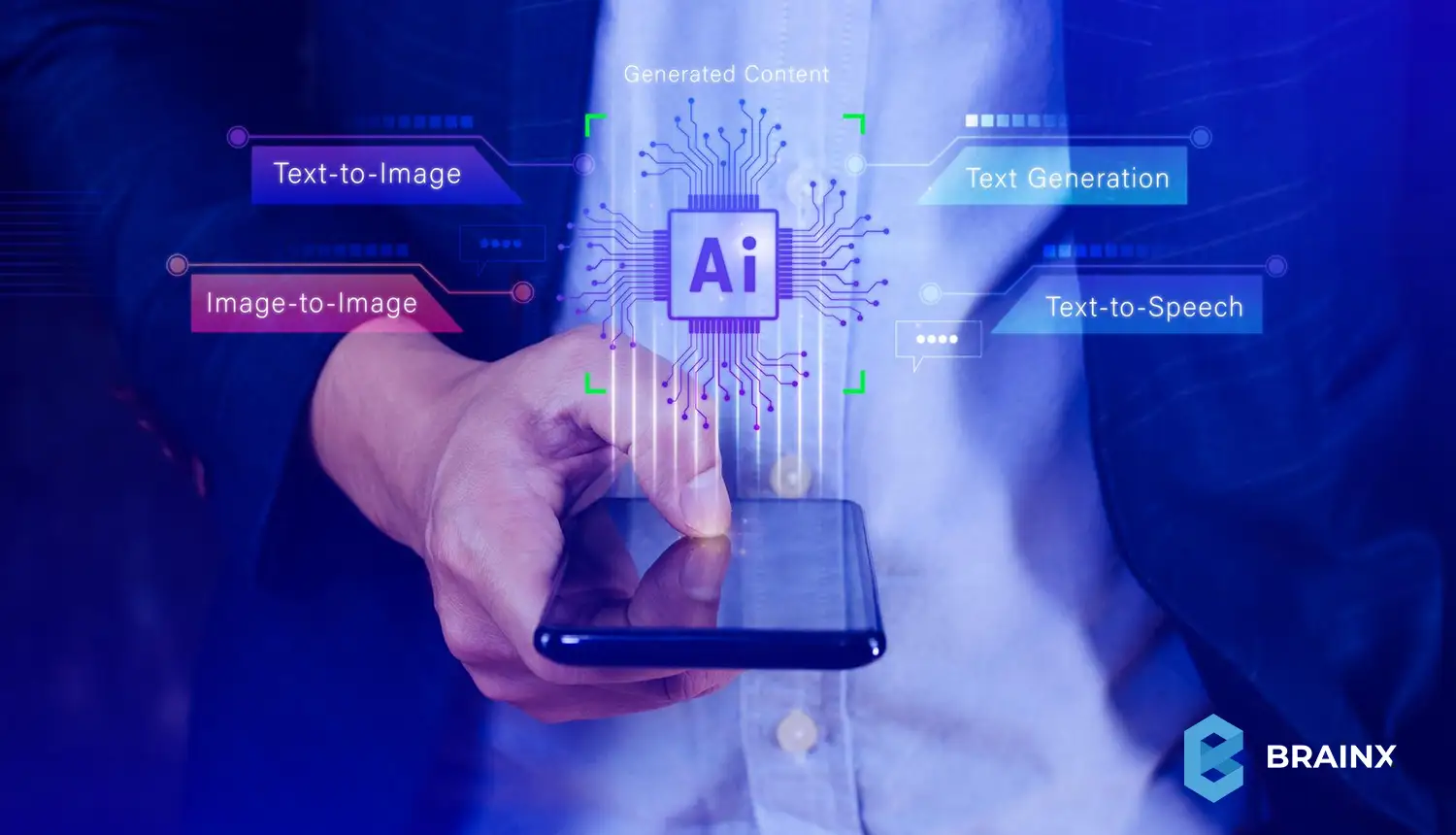
Generative AI is a sub-field of artificial intelligence that is able to generate novel content such as text, images, code, even music by observing whatever data is presented to it. Gen AI is a type of AI used to produce original artifacts in contrast to the traditional predictive AI (which makes predictions).
As an example, an autogenerative language model such as GPT can write emails or marketing text, and an image-generating model can write product mockups. These functions allow businesses to automate creative processes: firms based on gen AI experience 15.8% increased revenue and 15.2% reduced costs on the average. Generative AI applications are changing industries not only in marketing but also in R&D, since they allow creating content fast and personalizing it in large volumes.
Generative AI systems are generally made up of foundation models (large neural networks), which were previously trained on large datasets. Different model types excel at different tasks: for language-based tasks (chatbots, copywriting), transformer models are ideal, whereas for creating images or audio, models like GANs (Generative Adversarial Networks) or diffusion models are preferred. For instance, one guide notes that “GANs” work well for realistic image and video generation, while “Transformers” power sophisticated text generation. This flexibility means businesses can choose the right type of generative model to match their use case. Consequently, you may witness AI-driven automation for content creation, automated generators, and even personalized recommendation engines, and even AI-powered data simulations.
The Generative AI Importance to Businesses

Surveys indicate that 83 per cent of companies are already experimenting with generative AI tools and 60 per cent of companies have already handled some kind of AI within their operations.
These technologies are literally paying off: a study in the industry indicated that operational efficiency will increase by 25 percent, and the cost will decrease by 20 percent on average among companies that embrace generative AI. Generative AI is transforming industries worldwide — see how different sectors are adopting it in 2025 and beyond
In practice, it may mean the rapidity of product development, intelligent customer interaction, and less manual work, all of which are beneficial to the bottom line.
Applications of Generative AI in Businesses
The applications of generative AI in business are vast.
- Marketing teams are able to create personalized ad copy and images with the help of AI, which can boost rates of conversion.
- Recommendation engines based on AI have been demonstrated to increase average order value by an average of 30 and customer satisfaction by an average of 40 in retail.
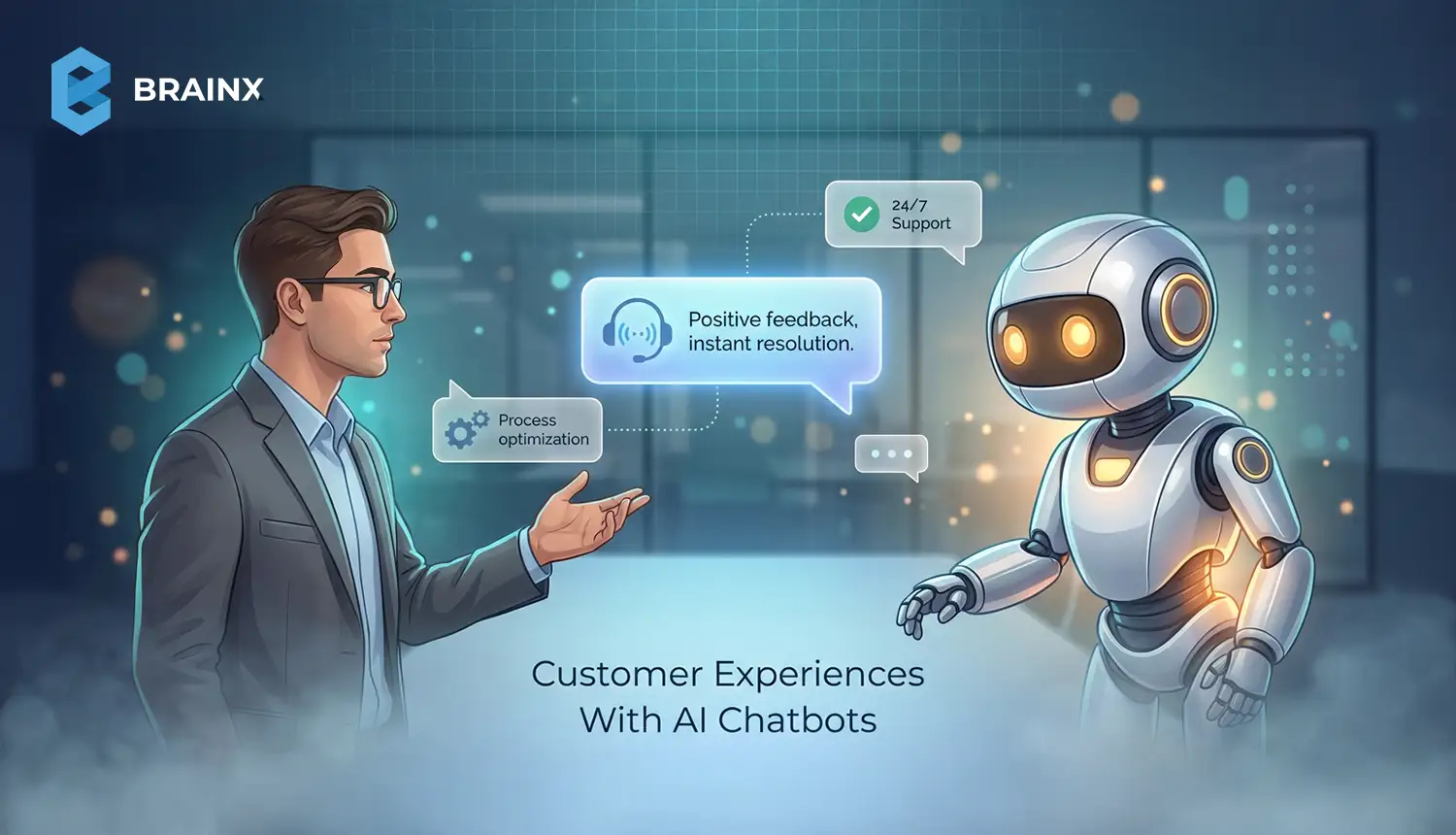
- AI chatbots employed by the customer service teams can address common questions 24/7 and save thousands of human-hours.
- Generative models are applied in R&D departments to simulate the design of products or even speed up the process of drug discovery.
- Software engineering can benefit: coding assistants (powered by generative models) help developers write boilerplate code faster. In software development, teams are already leveraging AI for collaboration and automation — discover 10 ways generative AI is optimizing teamwork.
- Basically, any routine or artistic task of content, whether it is writing reports or creating logos, has the potential to be automated or enhanced with generative AI use cases.
- The applications of AI in finance include companies to create market insights and individualized investment statements.
- In the production field, firms use AI to streamline design prototyping.
- In hospitals, AI-generated patient reports and diagnostics enable better health care.
How to Use Generative AI for Your Business?
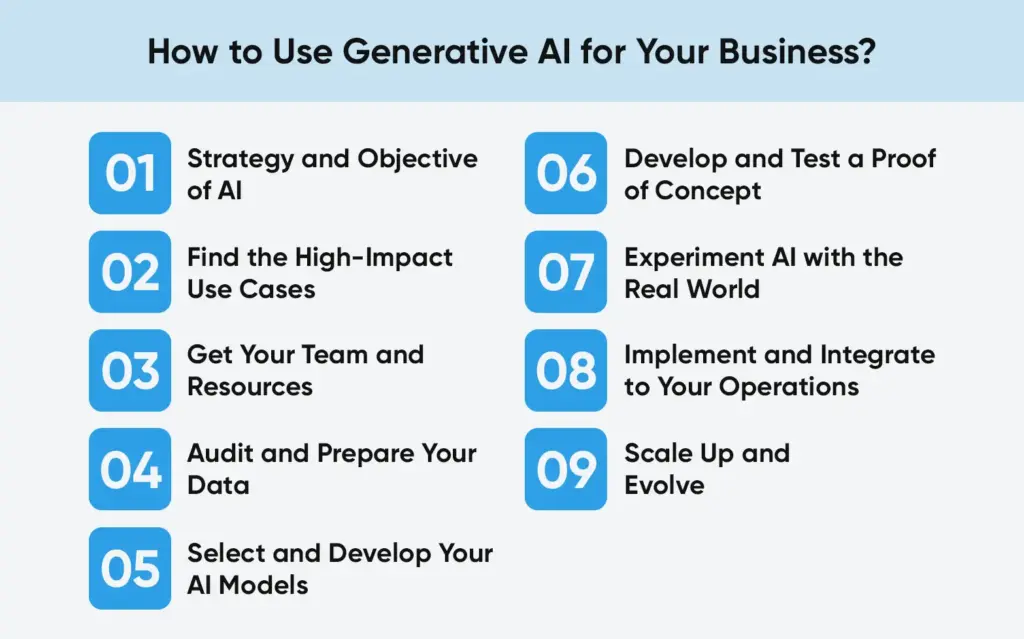
Having known what generative AI adoption can do for your business can be beneficial in multiple ways. Now, let’s explore the ways to adopt generative AI for your business.
Step 1: Strategy and Objective of AI
- The initial process is to establish clear goals of generative AI that would be in line with your business strategy.
- The questions to ask:
- Do you have to improve customer experience?
- Automate routine content tasks?
- Speed up design processes?
- In case of any possible AI initiative, associate it with quantifiable objectives.
- Putting goals in business terms will say, decrease customer support expenses by 10 percent, or decrease time-to-market on new products by 20 percent.
- It is important to involve business leaders at this point in time, making the AI objectives directly aligned with the general objectives of the company.
- Clarify the issue and deliverables. Clearly describe the business challenge (e.g. “We want to automate product description writing”) and the desired result (e.g. “Increase online sales by improving content generation speed and quality”).
- Set success metrics. Decide on how you are going to measure impact (e.g. revenue lift, cost savings, time saved, engagement scores). These metrics will steer your project and will assist you in justification of investment.
- Get executive buy-in. Introduce your AI objectives to company stakeholders. They will contribute to the optimization of the goals and make them company strategy-oriented.
Step 2: Find the High-Impact Use Cases
Having an idea of the result, identify particular applications of generative AI where it can bring the most value. The most advanced AI is not needed in all issues, and therefore focus on the areas where generative models are best. Common examples include:
- Customer care and chatbots: Virtual assistance based on AI can address the frequently asked questions and simple queries in real-time and enhance the level of customer care and free human-based agents.
- Creation and marketing of the content: Scale drafting of email campaigns, social media posts, or graphics using models and upholding brand voice.
- Design and prototyping: The product designs, mockups, or simulations (generating layout variations, 3D models etc.) are to be produced to accelerate R&D.
- Data analysis and predicting: AI will analyze data and come up with reports or predictions, discovering the patterns quicker than the manual approach.
- Generation of codes and documents: Reflexive coding or generation of legal/financial document draft.
Step 3: Get Your Team and Resources
The key to successful generative AI implementation is the ability to have a cross-functional team with a combination of technical and business expertise.
Key roles often include:
- Business Manager/Product Owner: He is in charge of the business part of the project as he will make sure that the AI solution meets the user needs and will reach the ROI objectives.
- Data Scientist / AI Expert: Trains and tunes the generative models, designs them.
- AI/ML Engineer or Software Developer: Applies the AI model in applications or processes. Develops user interfaces, API and pipeline of data ingestion.
- Data Engineer: Pipelines and prepares the data. Assures the accuracy, dependability and integrity of the data supplied to the model.
- Quick Engineer / Quality Assurance Specialist: (New positions) Develops useful prompts and verifies quality and aligned model output.
- Gen AI Strategist: Leads the activities of the team to ensure that the AI efforts remain aligned to the strategy and governance.
- (Optional) Cloud / DevOps Specialist: In case of large scale deployment, a person ought to take care of the cloud infrastructure and model deployment.
The expertise of each of these team members is different. Engaging software engineers earlier will result in more mature AI uses, whereas more recent roles such as prompt engineers can be used to optimize the user interface with models. In case your existing employees do not have any of these skills, you can use training facilities or recruit external professionals. Developing AI within the company is an investment that can be paid with the ease of implementation of projects.
Step 4: Audit and Prepare Your Data
“Data is the foundation of generative AI,” so inventory and prepare your data carefully.
- The first step is to list the available data sources to the use case you are working with. This can be databases, documents, images, customer review, transaction records etc.
- Evaluate all the data sets in terms of completeness and relevance. To give an example, in the case of a customer support AI, you would collect chat logs and email communications of the past; in the case of a design assistant, you would collect libraries of images and product specifications.
- Identify and clean and combine the data after identifying sources. Business data has a tendency of being messy (duplicates, errors, disparate forms).
- Your data engineers are supposed to use standard preprocessing: fill-in missing data, format normalization, and extract sensitive data.
- Make sure that strong pipelines are installed to ensure that the AI model is constantly fed with high-quality data. It can also be beneficial to store data centrally in a controlled platform or data lake and this can be easily accessed.
- At this stage, management and privacy must be taken into consideration. Make sure the personal or proprietary information is processed in reference to the laws (e.g. GDPR, HIPAA). Your team will have to clean fields that are sensitive, and can implement such methods as anonymization. The future of compliance-related problems will be prevented by having a defined data governance policy (who can see what data, and what is it used for).
Step 5: Select and Develop Your AI Models
Choosing or training your real AI model implies the selection of a basic model that can fit your purpose. A large language model (LLM) such as GPT-4 or an open-source alternative can be suitable in the case of a language-based (text generation, chat) use case. In case it is associated with images or media, a GAN (Generative Adversarial Network) or diffusion model that has been trained on them should be used.
- Most companies begin with canned models or APIs since they save on development time. To illustrate, you can use such a service as the API of OpenAI or Hugoing Face models and take advantage of available features in a short time. Existing models (such as GPT or Stable Diffusion) are easy to use, but might miss domain knowledge on a niche; a specialized model can be tailored to your specific data, but needs additional effort to be trained.
- Match model to task. Text (e.g. GPT to write) Use text LLMs, and images or design (uses vision models, e.g. GANs) Multimodal models are even capable of having text and images simultaneously (when marketing mixed media content).
- Think of the open-source and proprietary. Open-source models are more flexible and have no licensing costs, whereas proprietary APIs (such as GPT-4) tend to have state of the art performance and support.
- Plan to compute. Big models have high GPU/TPU requirements. Make sure that the training and serving of your desired model is a possibility within your infrastructure.
Step 6: Develop and Test a Proof of Concept
It is high time to train and test your selected model on the data that has been set up.
- It can begin with a proof-of-concept (PoC), a smaller solution to the entire one to test assumptions without taking too many risks.
- Train the model on your data.
- Monitor the training process closely.
- Adjust parameters (like learning rate, data volume) as needed to improve performance.
- Good tools and platforms (for example, managed ML services) can help track metrics during training.
- The goal is to get a working prototype that performs reasonably well on core tasks (e.g. generates coherent text or images based on your examples).
- Next, validate the model’s performance thoroughly. Go beyond technical accuracy to ensure the model behaves safely and ethically.
Step 7: Experiment AI with the Real World
Put the following scenarios to test your A.I. model:
- Do the generated outputs meet quality standards?
- Are they free of harmful bias or factual errors?
Key actions in this step include:
- Rigorous testing: Apply test cases and metrics you defined earlier to measure performance. Check edge cases and ensure the model doesn’t hallucinate incorrect content.
- Compliance checks: Take the model through any regulatory validation frameworks of your industry (e.g. FDA regulations on healthcare implementations or financial compliance audits).
- Iterate rapidly: Consider this a learning cycle. Test to improve the preprocessing of data, the architecture of the model or its parameters.
Step 8: Implement and Integrate to Your Operations
Having a proven model, now it is time to put it into a real-life setting and make it a part of your business. Deployment involves moving the trained model that is in a prototype environment and linking it to live systems to allow users to actually utilize it.
- To begin with, implement the model with your IT and development teams. It’s usually done by making the AI accessible through an API or embedding it into an existing application interface.
- Then, be scalable and reliable. Performance of the model (latency, error rates) should be monitored and be ready to add more computing resources in case of usage spikes.
- It is also prudent to have backup strategies (e.g. delegate key tasks to a conventional system in the meantime).
- Lastly, define explicit feedback loops.
- Solicit input from end-users:
- Are they useful in the outputs of the AI?
- Request them to point out errors or recommend on how to do things better.
- Measures real-world impact by also gathering measurements (such as user satisfaction scores or business KPIs). Feedback is essential: it is frequent that generative AI models can be improved when retrained with new data or fine-tuned with user interaction.
- A practice that is best to adopt is to periodically review whereby your team goes through the feedback and makes a decision on whether to change the model or data pipeline.
Step 9: Scale Up and Evolve
Once the initial deployment is proving value, scale the solution to broader use. It means expanding to new areas of your business and enhancing the AI over time.
- Broaden the scope: Identify other departments or functions that the same generative AI solutions can be used. To illustrate the point, in case you had an AI-based marketing copywriter, the salespeople could also have a similar tool to generate outreach emails. The model or data will need minor modifications with each new use case, however, the fundamental technology may be reused.
- Advance the technology: As you scale, explore more sophisticated features. You might upgrade to a more powerful model, incorporate multimodal inputs (e.g. add image inputs to a text model), or integrate additional data sources. Keep an eye on emerging AI trends for instance, newer large models or specialized AI services – that could boost performance.
- Maintain governance and ethics: As AI usage grows, continue enforcing policies on data privacy and bias. Periodically audit the models and their outputs. Use automated tools if possible to monitor for issues like model drift or ethical violations.
Governance, Ethics, and Culture
Responsible use is a very important aspect of an AI strategy. Generative AI, specifically, has its own considerations to take into account, and if it is not adequately monitored, it can create biased or even offensive content. Since the beginning, construct protection:
- Ethics as an engineering capability: Develop ethical standards of the AI output (e.g. no hate speech, no leaked personal data). Use techniques like content filtering, bias reduction algorithms and humans in the loop analysis of sensitive outputs.
- Transparency and trust: Be transparent with the customer and the working population on the implementation of AI. As a demonstration in the case of an AI-generated chatbot, make it apparent. When customers are convinced that AI is being utilized in the appropriate manner, they will become trustful.
- Regulatory compliance: Compliance with regulations in the industry (e.g. the GDPR in data or industry-specific own AI regulations). Keep a documentation of your AI processes and this will be required by the auditors or regulators at some time.
- Continuous monitoring: Once the model has been deployed, continue to check the model against unintended behavior. As an illustration of this, it can be structured as a periodical review of AI output, where the output is sampled or tested by human specialists.
- Culture and skills: Lastly, develop an AI friendly culture. Educate your team to learn the basics of AI and to become familiar with it.
- Foster curiosity: The employees are to be encouraged to report the AI mistakes. The use of AI is not technologically deterministic but rather people deterministic. Ensure that the knowledge of all the executives and end-users is informed of what generative AI can or cannot do.
Next Steps to Get Started….
Creating a journey in the field of generative AI is more of a marathon, rather than a sprint. The above steps form a roadmap that is used to guide strategy to scaling.
To recap the key takeaways:
- Start with clear goals: Connect the AI perspective projects to particular business performance.
- Select the appropriate pilot: First focus on one and big impact use-case (an indicator of the approach).
- Take advantage of your data: Generative AI is only as good as the data on which you feed it.
- Train your AI models: Regularly retrain them with fresh, high-quality data to improve precision and explainability.
- Assemble a powerful team: Unite business management, data expertise and engineering.
- Iterate rapidly: The first deployment is a learning process, treat it as such; get feedback to get better.
- Govern responsibly: Have ethics and compliance in mind at all levels.
- Scale strategically: After the pilot is proven valuable, then extend the pilot to other regions without losing control.
Conclusion
Generative AI in your business can open up new efficiencies and innovations. With this guidance, you will be in a good position to implement AI in a highly manageable and quantifiable manner and expand its influence over time. The winning companies will be the companies that do not just embrace the technology, but also establish the appropriate strategy, culture, and governance on it.
By following the following steps, your organization can now realize the opportunities of generative AI by automating creative work, reinventing products and services, and finally gaining a competitive advantage over your competitors in the future of AI.
FAQs
1. What should be the optimal business applications of Generative AI?
Generative Artificial Intelligence is able to compose blogs, create descriptions of products, create images, and even create human-like dialogues in chatbots. Artificial intelligence can be used to personalize communication and help to optimize response time. When applied in the internal processes, it assists teams to summarize the report, write proposals faster and shorten the brainstorming process.
2. What should be my first step in Generative AI in my company?
To start, one does not need to make a giant technological change, it is about determining where AI has the most significant impact.
- Choose one area that is repetitive or time-consuming such as marketing content development or lead qualifying.
- Select a proven AI system to execute your first pilot.
- Coach your staff, gather feedback and gauge any changes of time and quality.
- After you begin to see positive returns, you can slowly start applying AI to other departments.
3. What are some of the risks or difficulties of using Generative AI?
There are the risks of data security, the possibility of bias in the generated content by AI, and the error or misleading results (so-called hallucinations). There is an increasing ethical concern on originality and transparency. These risks can be dealt with through vetted datasets, human review layers and adhering to international standards such as GDPR on privacy.
4. What is the cost of the implementation of Generative AI?
There are tools that can be used by small enterprises and cost only a few hundred dollars per month. In the case of larger businesses, creating individual AI models, or connecting with internal systems, could cost thousands to tens of thousands a month.
5. What is the ROI of Generative AI Projects?
Quantitative results are lower operation costs, improved speed of delivery, more content and better lead conversion and increased innovation and productivity of employees.
In the case of creative teams, measure such engagement metrics as click-through and customer satisfaction.
Introduce the Generative AI Power to Your Business with BrainX
Think of ideas that are self-creating, workflows that are self-optimizing and customer experiences that are dynamically changing. It is the case when Generative AI is mixed with BrainX innovation. Our professionals do not merely add AI, they make it part of your business to discover smarter automation, insights and unlimited inventiveness. Concept-to-deployment We transform your vision and create a living, learning system that grows.
Book your free consultation and discover how BrainX can help to transform AI potential to business power.