

Recruiting the best software developers is now a daunting task for most businesses. The need for talented software engineers outnumbers the supply, and this has created stiff competition for talent. In fact, by 2030, the global deficit of tech skills will stand at more than 85 million, jeopardizing billions in foregone business revenue.
SaaS companies and software firms frequently experience lengthy hiring processes, hefty salary expectations, and talent deficiencies in their staff. These hiring hurdles can delay product roadmaps and impede growth. Amidst these challenges, staff augmentation has emerged as a strategic solution. It allows organizations to quickly bring in qualified software developers and IT professionals from external providers to extend their in-house team.
Instead of struggling for months to hire full-time employees or overburdening existing staff, companies can augment their development team with specialized talent on-demand. This blog will help you explore the role of IT staff augmentation in software development and how it helps build scalable, flexible software development teams.
What is IT Staff Augmentation in Software Development?
IT staff augmentation is an engagement model where you temporarily hire external IT specialists to extend your in-house team. Think of it as adding contract software developers, engineers, or designers from an outside provider to work under your direction on your projects – without the long-term commitment of a permanent hire. This approach gives your company immediate access to talent for a specific project or period when you need it most.How is staff augmentation different from outsourcing or freelancing?
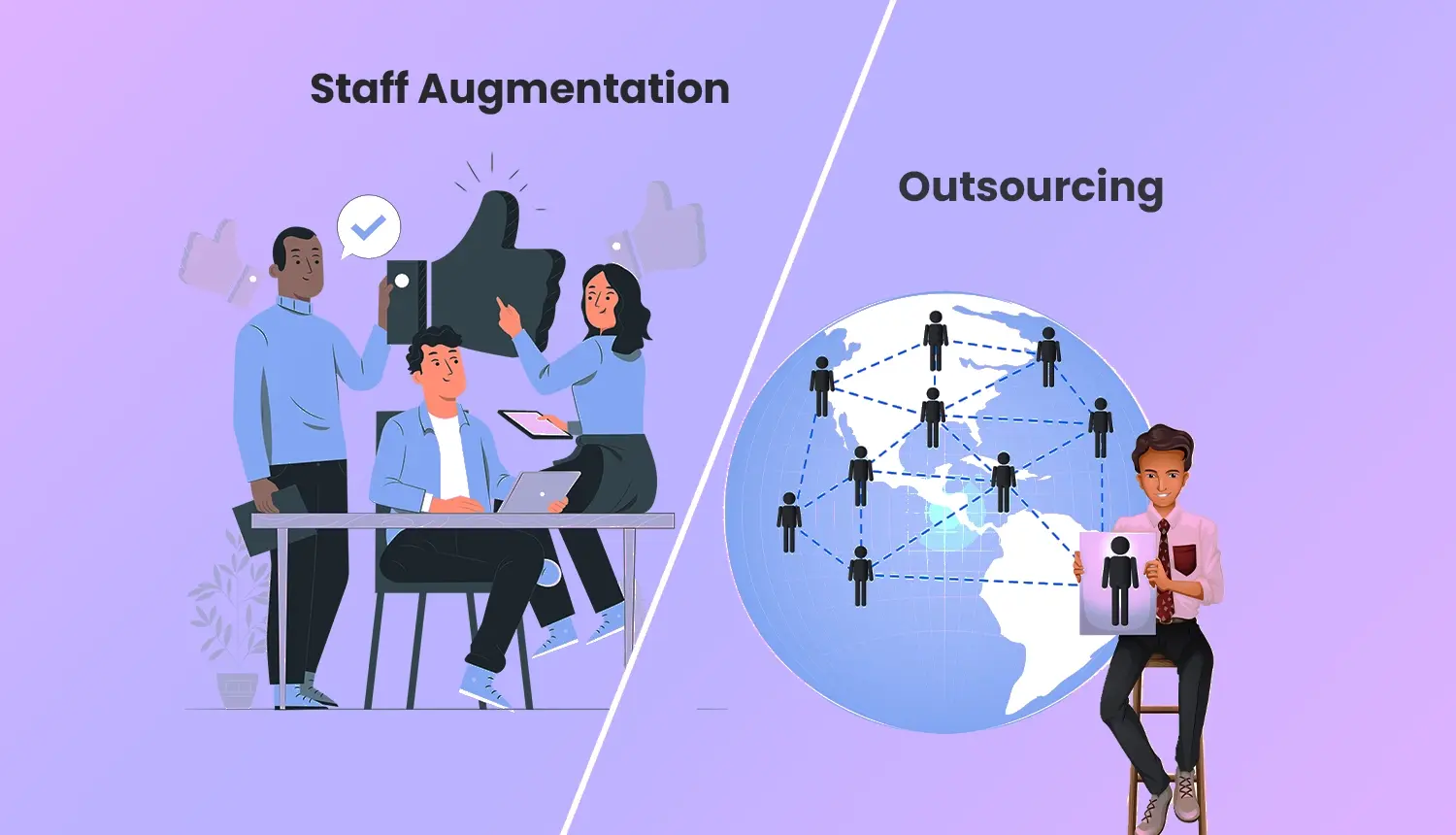
Unlike outsourcing, where an external agency takes over an entire project and manages it independently, staff augmentation lets you retain control. The augmented specialists integrate directly into your team’s workflow and follow your processes and schedules. You access outside expertise without sacrificing control of the work. Automatically, although engaging a freelancer provides you with a stand-alone contractor for an assignment, augmented staff generally pass through an agency that screens and allocates experts committed full-time to your endeavor.
They are integrated into your staff and report to your management, being held responsible for meeting your standards and objectives. Essentially, IT staff augmentation provides the best of both worlds– the advantages of outsourcing paired with the close control of hiring in-house –and is an effective means to rapidly scale your technical capabilities.
📘 Want a deeper dive into benefits, challenges, types, and implementation? Read our full IT Staff Augmentation Handbook to build smarter, scalable dev teams.
Benefits of IT Staff Augmentation
Adopting IT staff augmentation offers several clear advantages that solve common team scaling challenges:
-
Access to Specialized Skills
You can tap into niche expertise on demand. If a project requires skills your team doesn’t have. For example, a machine learning engineer or a UX designer, staff augmentation lets you bring in that specialist quickly. You don't have to be held back anymore by your internal talent, and even small firms can take advantage of new technology without the long process of recruiting or training.
-
Cost-Effectiveness
Staff augmentation is usually cheaper than conventional hiring or big outsourcing contracts. You only pay for the skills of the expert for as long as you require them. There’s no long-term salary commitment and no expenses for benefits, recruitment, or additional office space. In short, you get high-quality talent without the full-time price tag.
-
Scalability and Flexibility
You can scale your team up or down as needed. Bring on extra developers during a peak workload or critical deadline, then scale back when things normalize, without the hassles of hiring or layoffs. This flexibility allows you to always have the correct team size for immediate needs. It's a perfect fit for variable workloads, allowing you to adjust in real-time when you're ramping up to a big release or switching over to a new project.
-
Faster Hiring & Time-to-Market
IT staff augmentation significantly shortens the hiring timeline. Providers have talent ready to start, so you might onboard a skilled developer in days instead of months. By getting talent in place quickly, you can begin development sooner and deliver your product to market faster. Hitting critical deadlines and reducing time-to-market gives you a valuable competitive edge.
-
Project Control & Seamless Integration
With augmented staff, you maintain direct control over your projects. External team members work under your leadership and follow your processes, ensuring your standards are upheld. They also integrate into your existing workflows (joining stand-ups, using your tools) so that collaboration feels natural. Essentially, you gain extra team members without losing oversight or team cohesion.
When Should You Use IT Staff Augmentation?
Nearly any company can use on-demand talent, but there are certain circumstances where staff augmentation really excels. Consider applying IT staff augmentation in the following situations:
-
Tight Deadlines or Urgent Projects
When a project has a tight deadline, taking months to bring on full-time employees isn't feasible. Augmentation allows you to bring on seasoned developers or designers quickly to fill the timeline. The extra hands help you deliver on schedule without overworking your core team.
-
Niche Expertise Needed
Occasionally, a project requires an expert skill set that your team lacks , such as a data scientist to do an AI feature or a DevOps specialist for a cloud deployment. Staff augmentation enables you to hire in the specialized skill for the project alone.
-
Scaling for Growth or Peak Demand
While undergoing spiky or fast growth during times of busy season or demand peaks, you may need to quickly ramp up development capacity. Rather than hire a permanent set of dozens, you can augment your onboarding with additional developers or testers to respond to the influx.
-
Fast-Tracking Startups
Startups often ask How does IT staff augmentation help startups? The answer: it gives new ventures immediate access to seasoned talent without the delays and costs of traditional hiring. If you need to build a product or MVP quickly, augmenting your small team with experienced developers can be a game-changer. You accelerate development while avoiding hefty long-term payroll commitments. In short, staff augmentation lets startups move faster and compete with larger companies by leveraging top talent on a flexible basis.
🚀 For startups also navigating strategic tech leadership gaps, CTO outsourcing strategies offer expert guidance without the cost of a full-time executive.
IT Staff Augmentation vs Outsourcing
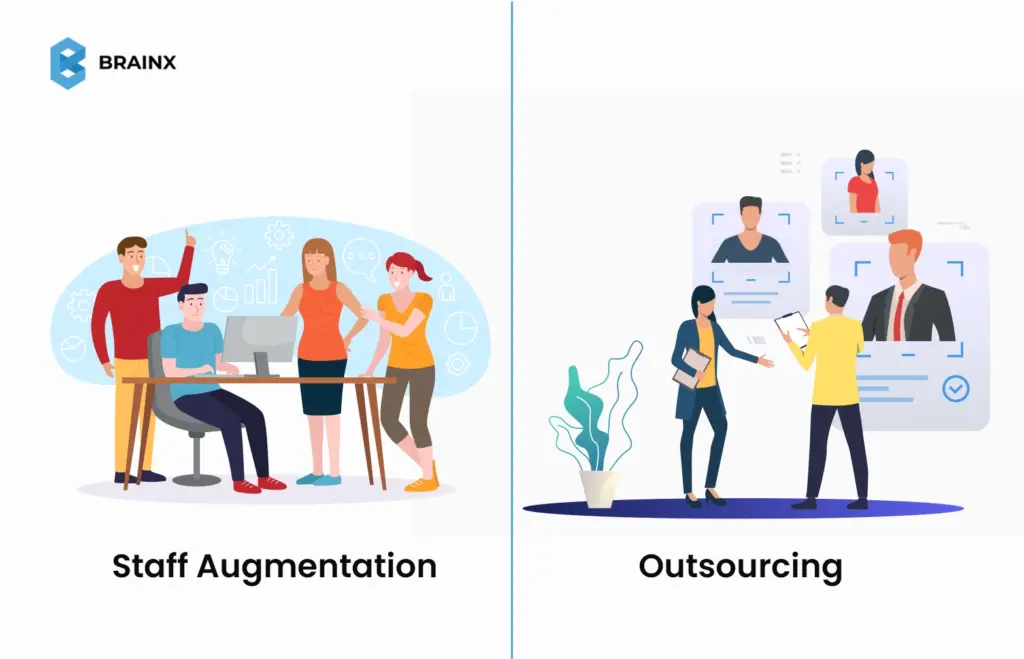
Business leaders often ask whether they should augment their team or outsource a project entirely. Both models involve bringing in external help, but there are clear differences in how work gets done. Here’s a direct comparison of IT staff augmentation vs. outsourcing:
IT staff augmentation involves augmented staff working alongside your in-house team, allowing for greater integration and collaboration. You maintain direct control over the augmented team members and their work, providing more day-to-day oversight. This model is highly flexible, enabling you to scale the team up or down quickly as needs evolve. Additionally, you only pay for the talent and hours you require, avoiding long-term salary commitments or benefits. In contrast, outsourcing involves assigning the project to an external team that operates independently from your staff. The vendor’s managers oversee the project, meaning you have less direct control. Outsourcing is generally less flexible due to contractual constraints, and any changes often require renegotiation. Costs are typically based on a fixed project fee, which includes vendor overhead and profit margins.
IT Staff Augmentation vs Full-Time Hiring
When considering staff augmentation versus hiring full-time staff, keep an eye on the kind of needs you have:
- Staff Augmentation is ideal for short-term projects or varied workloads. It provides speed and agility so you can bring talent in and release them when the project finishes. You won’t be carrying extra payroll once the work is completed.
The trade-off is that augmented staff are temporary; they might not accumulate the deep product knowledge or loyalty of a permanent team member (though you can often extend contracts or even hire top performers full-time later if they’re a great fit). - Full-Time Employees are ideal for long-term needs and core roles. A permanent team member becomes part of your company culture, gains extensive knowledge of your products, and can grow with your business. This is valuable for ongoing development and maintenance.
However, recruiting full-time staff takes time and is a significant fixed cost – you pay their salary (and benefits) even during slow periods. This investment only pays off if you have a sustained, ongoing need for their expertise.
🔍 Still evaluating both options? Check out our staff augmentation vs outsourcing comparison for a clear breakdown of pros, cons, and ideal use cases.
How to Implement IT Staff Augmentation Successfully?
Adopting staff augmentation is not just about finding talent – you also need the right processes to make it work smoothly. Here are some best practices for success:
1. Choosing the Right Staff Augmentation Partner
Start by selecting a reputable staff augmentation provider. Look for a partner with experience in projects like yours and a robust vetting process for their talent. Check client reviews or case studies, and ask to interview the proposed team members if possible.
A good provider will understand your industry and send candidates who fit both the technical requirements and your company culture. Choosing the right partner ensures you get competent professionals who can hit the ground running.
2. Onboarding and Integration
Treat augmented team members as an extension of your own team from day one. Give them access to code repositories, project documents, and communication channels, as you would for a new employee.
Get them familiar with the in-house team and define roles, responsibilities, and project objectives. Invite them to all pertinent team meetings and rituals (daily stand-ups, planning sessions, etc.). By getting them plugged into your processes and company culture, you enable them to work effectively and rapidly.
3. Managing Remote Developers Effectively
Most augmented staff are remote workers, so proactive management is essential. Have open communication channels and frequent check-ins to ensure everyone is on the same page. Utilize project management tools (e.g. Jira, Trello) and version control so work progress is open.
If there are time zone differences involved, establish some overlapping working hours or schedule a time for real-time discussions. Take advantage of video calls and chat tools for regular sync-ups. By keeping an open line of communication and outlining tasks and due dates, you can handle remote developers as well as on-site employees.
4. Ensuring Security and Compliance
When bringing in external developers on your projects, keeping sensitive data and IP safe is of top priority. Make contractors sign NDAs and spell out intellectual property ownership in your contracts.
These measures will reduce risks and keep your company's data secure during the engagement.
- Give augmented staff access only to the systems and information necessary for their work.
- Use secure development environments and enforce your company’s security protocols (for example, requiring VPN or 2FA access where appropriate).
- If industry regulations apply (like GDPR or HIPAA), brief the augmented team on compliance requirements.
- When a contractor’s term ends, promptly revoke their access to systems and repositories.
Challenges and How to Overcome Them

Even with all its advantages, IT Staff Augmentation in software development comes with some challenges. Many discussions mention these risks, but few explain how to tackle them.
Here are common hurdles and ways to overcome them:
Integration & Cultural Fit
External team members might initially struggle to mesh with your company’s culture or work style.
To overcome this:
- Treat augmented staff like part of your team. Include them in team meetings and communications
- Consider assigning an in-house mentor to help them get oriented.
- By welcoming them and sharing your work norms early, you’ll help the external staff to blend in and work smoothly with your core team.
Communication Gaps
If your augmented developers work remotely or in different time zones, communication issues can arise.
Solve this by:
- Setting clear communication channels and regular check-ins.
- Use collaboration tools (chat apps, video calls) to keep everyone connected daily.
- If there’s a time zone difference, establish overlapping hours or a schedule for critical meetings.
- Consistent, structured communication will keep your distributed team on the same page.
Quality Control & Knowledge Transfer
Temporary team members might produce work that doesn’t initially meet your standards, and there’s a risk that knowledge leaves when they do.
Mitigate this by:
- Applying the same QA processes to augmented staff as you do internally through code reviews, testing, and feedback.
- Ensure they document their work and share knowledge with your in-house developers throughout the project.
- Before a contract ends, hold a handover session to capture any remaining know-how.
Dependency and Data Security
Relying on external people for critical work can feel risky, and you may worry about protecting sensitive data. The key is to plan and protect.
Avoid single points of failure by:
- Spreading critical tasks among multiple team members (so you’re not wholly dependent on one contractor).
- Secure your data by signing NDAs and give them access only to the systems and information necessary for their role.
- Plan for continuity and enforce strict data security measures to confidently leverage external talent without compromising your project or information.
⚠️ New to outsourcing? Here’s a breakdown of common outsourcing software development mistakes and how to avoid costly missteps during staff augmentation.
Real-World Case Studies
Here are a few examples of how companies have successfully used IT Staff Augmentation in software development:
Google’s Use of Staff Augmentation at Scale
Even tech giants rely on staff augmentation. Google hires so many freelancers that over the past several years they've sometimes outnumbered its full-time staff. Hiring external experts on a contract basis as needed, Google can rapidly expand groups for new ventures without the lags of normal hiring. This allows Google to accelerate development and innovate rapidly.
PayPal: Rapid Team Expansion for New Projects
PayPal has used IT staff augmentation to meet aggressive development goals. When PayPal needed to roll out new features (like updated mobile payment capabilities), it augmented its internal development team with experienced contract developers rather than trying to hire many full-timers immediately. These augmented programmers worked under PayPal’s managers and followed the company’s processes, providing a surge of productivity exactly when needed. As a result, PayPal was able to launch new products faster and handle growth spurts without overburdening its core team.
Scale Your Tech Team with BrainX Technologies

BrainX Technologies provides flexible IT Staff Augmentation in software development to help businesses overcome tech hiring challenges. We supply top-tier software developers to extend your in-house team and fill skill gaps quickly. Whether you need to build an MVP fast or require niche expertise for a critical project, BrainX delivers talent without the long recruitment process.
Our augmented staff integrates with your workflow, so you retain full control over projects. This approach helps you scale up development, meet tight deadlines, and avoid the costs of long-term hires.
Contact BrainX Technologies today to learn how our staff augmentation solutions can power your next software venture.