

Outsourcing software development can cut costs, accelerate delivery, and drive innovation—but only if done right. Follow these 14 essential rules to outsource a development team, covering everything from choosing the right vendor and pricing models to managing culture fit, documentation, and risk.
Outsourcing has become a key strategy for companies looking to enhance efficiency, reduce costs, and focus on their core competencies. However, building a lasting outsourcing partnership is always tricky and requires effective planning and execution to feel safe and successful. Setting clear guidelines might be what makes the difference between long-term partnerships and costly mistakes.

The best rules to outsource a development team involve choosing the right partner, defining the project scope, and clear communication with the vendor. Observance of these best practices helps organizations maximize the benefits of outsourcing while minimizing risks.
These rules for outsourcing a development team can significantly reduce project risks and help businesses scale faster through trusted external partnerships.
What is Software Development Outsourcing?
Software development outsourcing is the assignment of tasks or total projects to another external third party instead of relying on an in-house team. While in-house development tends to require a long-term internal team, outsourcing benefits from flexibility through its per-project-based hiring options, thereby cutting down on incurring costs in hiring and saving time.
Outsourcing is enabling companies to outsource software development, for specific features to full end-to-end development, by totally entrusting it to external experts. Businesses identify areas that need specialized skills and partner with technology providers to meet those needs. The external team analyzes the requirements and initiates the development process accordingly.
Increasing demand for digital products has made software development outsourcing a very common practice across various industries. It assists companies in bridging technology gaps while:
- Saving costs
- Increasing scalability
- Enhancing existing software to keep abreast of competitors
Whether it's a small startup or a large enterprise, outsourcing has become a widely adopted strategy for accelerating product development and driving innovation.
14 Rules to Outsource A Development Team
Having established the importance of adhering to guidelines in outsourcing, we now turn our focus to the specific rules that can drive successful partnerships. These rules encompass aspects like vendor selection, project management, and communication strategies, ensuring that your outsourcing efforts yield optimal results while mitigating potential challenges.
1. Know What To Outsource & Skip
Knowing the best time to outsource and maintain an in-house team creates balance and drives your project to success. Not everything needs to be outsourced and to know the difference between in-house and outsourced product development is a must. Businesses can maximize outsourcing benefits by identifying which tasks to delegate and which to manage internally.
It’s best to outsource areas where your expertise is limited, allowing specialists to handle those tasks, while retaining core functions in-house to maintain control and quality. This balanced approach ensures both efficiency and focus on what truly drives your business forward.
2. Choose a Reliable Tech Vendor with Niche Expertise
Apart from being technically competent and located close enough, your vendor ought to have rich expertise in your niche. Industry expertise will equip web, desktop, and mobile app development agencies to address unexpected challenges in the product development process and deliver tailored, high-quality solutions.
Being one of the most effective rules to outsource a development team, it helps businesses find niche expertise and comply with relevant regulatory requirements, especially for highly regulated sectors. But if you opt for an experienced vendor from your specific field, then project development will be more effective with better adherence to industry standards, which eventually leads to smoother project execution and a product that meets market expectations.
3. Check Related Case Studies
To leverage industry-specific expertise, choose an app development company with at least 5+ years of experience in your sector. Review their case studies to understand the company’s role in delivering relevant solutions. Ensure their experts possess industry-relevant skills and offer continuity, which is critical for mobilizing the right expertise when needed. Another one of the key rules to outsource a development team is to validate the provider's long-term experience in your niche through detailed case studies.
It's also essential to verify that the company still employs the individuals who worked on similar projects, as expertise can sometimes be lost when key team members move on. Such continuations have a major impact on the success of your app development project.
4. Assess Team Composition and Qualifications
The composition of your app development team is crucial to success, ensuring the right mix of skills. A diverse team should include designers, developers, architects, data scientists, and QA engineers, with expertise in relevant technologies. Review them carefully regarding qualifications, certifications, and experience, especially about areas critical to the success of your project.
For example, when outsourcing the development of mobile applications for payment software, source those developers who are agile in Java/Kotlin (Android) or Swift/Objective-C (iOS), with experience integrating payment APIs. At the same time, make sure security experts with certifications such as CISSP and backend architects can build scalable, compliant infrastructures.
5. Verify Commitment to Skill Development
Assess developers’ seriousness towards continuous training and development of their skill. Examples would be attending industry conferences, and workshops, completing online courses, or other relevant certifications.
For example, locating an iOS developer who is qualified and verified to own certifications like membership to the Apple Developer Program, certification of an Apple-certified iOS developer, or a Swift developer's certification, would give evidence of their capabilities along with their commitment to keep in step with industry specifications for quality developments.
6. Evaluate Technical Proficiency
Request for a demo and prototype to assess the vendor's technical proficiency. Following this rule will help you evaluate their strengths and weaknesses and assess their commitment to implementing best industry practices. Reviewing portfolios similar to your project will help you get a better understanding of their quality of work and expertise.
If you're considering outsourcing mobile application development for banking software, you might start by asking for a prototype of a mobile banking application they've worked on. This could include features like account management, transferring funds, and bill payments, among others. You should also ask how they would ensure security, using methods such as two-factor authentication.
7. Conduct Technical Interviews or Assessments
To assess a vendor’s technical expertise, request access to sample code, demos, or prototypes they’ve developed. This gives you firsthand insight into their skills and adherence to best practices in your specific technology. Additionally, reviewing their portfolio of similar projects offers a deeper understanding of their capabilities and work quality.
For example, if outsourcing mobile app development for banking software, ask for a prototype showcasing key features like account management, fund transfers, bill payments, and security measures such as two-factor authentication.
8. Learn The Documents
After discussing the app concept and other key details, it’s important to understand how the development process is documented. Common documents include:
- Service Level Agreement (SLA): A mini-contract outlining expectations from the vendor and service quality standards.
- Schedule of Values (SOV): A detailed breakdown of project development stages, thereby enabling you to track their progress from start to finish.
- Software Requirement Specification: A set of requirements that define how a product should work to express its capabilities.
These documents ensure clear communication and project transparency throughout development.
9. Pricing Model
Following are the most popular pricing models that help software development partners collaborate effectively, ensuring success:
- Time & Material (T&M)
- Fixed Bid
While a Fixed Bid provides an upfront estimate, it’s crucial to understand the potential costs associated with changing requirements later. This is especially important when using Agile methodologies like Scrum, where requirements often evolve. This can increase the project’s overall cost, and securing additional budget during development can be challenging.
T&M models are flexible and allow businesses to control their outsourcing budget and results. Additionally, ensure your development partner can scale resources up or down as per the dynamic business demands.
- What is their pricing model?
- What is their payment schedule?
- What is the cost of changing requirements?
- Do they allow scaling up or down resources according to the dynamic business requirements?
10. Organization & Workplace Culture
While selecting a software development partner to outsource, it is important to look into the vendor's culture. A service provider who shares the core values of your company will better understand the goals of your organization and be willing to attain them. This cultural alignment fosters stronger working relationships, boosting productivity, improving results, and enhancing retention. Evaluating how the vendor treats employees, their mission, and core values is key to this process. Consider important questions such as: How do their objectives align with yours? What is their management style? Are customer satisfaction and employee development prioritized?Here are some more questions to evaluate your outsourcing partner better:
- What is the organization's mission or vision?
- How well do their business goals align with yours?
- How highly is customer satisfaction prioritized?
- What is the management style across the organization?
- How is the company performing overall?
- Are the company’s plans and roadmap communicated to employees?
- What personnel development programs are available?
- What employee benefits are provided?
- What systems for rewards and recognition are in place for employees?
- What is the organization’s attrition rate?
11. Set Software Development Chronology
The development phase, often the longest part of the software lifecycle, is dedicated to building the app architecture and delivering a solution tailored to your requirements. Due to project complexity, you may work with specialists like iOS, Android, or web developers to implement key features. This phase is divided into sprints, typically lasting 10 working days. Each sprint begins with a planning session where the team reviews the workload and sets clear objectives. This structured approach ensures that development progresses efficiently and stays aligned with your project's goals, promoting smooth collaboration and timely completion.
Here are the important that you must consider while clarifying your software development chronology:
- No step is finalized without the Project Manager's supervision. The PM tracks all changes throughout each sprint, documenting new features, bug fixes, and enhancements to existing features.
- Developers begin building the required features, often collaborating with specialists like iOS, Android, or web developers. Launching across multiple platforms can broaden your product’s reach.
- QA engineers assess the product's functionality, report bugs to developers, conduct stress testing to identify breaking points under heavy loads and re-verify the solution to ensure proper functionality.
12. Don’t Ignore The Discovery Phase
The discovery phase is important for establishing the crucial foundation for any project's success. We’ve previously discussed its importance in our tips for CTOs on outsourcing product development. Emphasizing this point, effective collaboration between stakeholders and app development companies can lead to the creation of a detailed roadmap. This phase highlights the project's scope, aims, and expected technical challenges. This collaborative approach ensures all parties are aligned and prepared. It sets the stage for a successful development process that meets the project's goals and addresses any anticipated obstacles.
13. Choose the Right Engagement & Delivery Model
A suitable engagement model during software development ensures that the project serves all your requirements, maximizes efficiency, and controls costs, therefore being flexible in collaboration between the client and the outsourced team. The choice of T&M reduces major risks in outsourced projects more than other models because it leaves more control over the scope and budget of a project.
For a detailed look at how staff augmentation works, when to use it, and how it compares to other models, explore our IT Staff Augmentation Handbook.
-
Dedicated Team Model
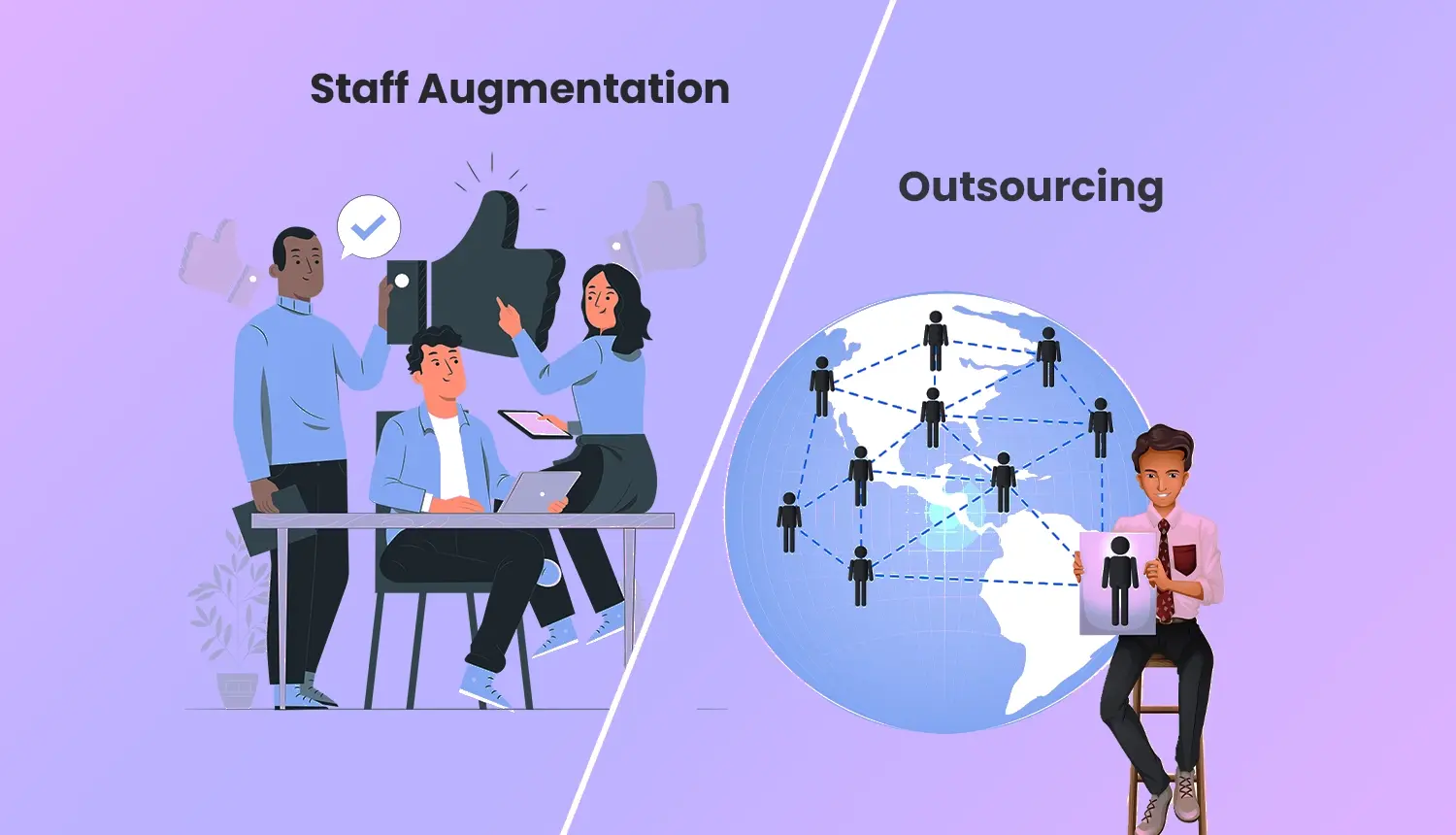
If you’re looking to hire IT specialists for a specific project, the dedicated team model may be ideal. This approach provides access to a skilled talent pool while allowing you to manage the team effectively. Team members work autonomously, leveraging their expertise to deliver the desired product efficiently.
The dedicated team model is suitable for:
- Businesses that want to assemble a skilled and cohesive software development team. This team consistently addresses complex challenges and enhances collaborative problem-solving throughout the project.
- Engaging a dedicated team ensures timely maintenance responses and ongoing support, minimizing downtime and maximizing system reliability. Team members are readily available to tackle any issues that may arise.
- Businesses can quickly and efficiently adjust team size for new projects or after project completion, avoiding long-term commitments while maintaining flexibility.
- Hiring a dedicated app development team guarantees consistent progress and focus. This allows team members to deeply understand project intricacies, enhancing efficiency and fostering seamless collaboration.
- Staff Augmentation Model
IT staff augmentation models suit businesses that want to integrate external resources to improve the performance of their existing in-house team. Instead of enlisting more portable app engineers, architects, or QA engineers, you can select transitory or contract developers. It will help you address particular ability insufficiencies, fulfill venture prerequisites, or oversee increased workloads. Staff augmentation is beneficial for businesses in the following situations:
Short-Term Projects
Helps businesses swiftly integrate external expertise to enhance the performance of their in-house software development team. This allows them to fulfill project needs without the burden of long-term commitments.
Skill Gap
Integrating external specialists with the necessary skills can enhance project capabilities. This approach allows them to access expertise without the extensive training or recruitment efforts typically required for new hires.
Seasonal Workloads
This allows businesses to stay productive and meet deadlines set on projects while still delivering quality outcomes without burdening their in-house team.
Flexible Resource Allocation
With less overhead on hiring full-time employees, organizations could scale up or down with the needs of projects.
-
Offshore Development Center (ODC)
An offshore development center is an extended version of the in-house capability, but with much more cost-effective efficient mobile development outsourcing and access to the right talent, along with all essential infrastructures.
An ODC engagement model is suited for the following:
- Establishing an ODC allows companies to tap into skilled professionals at competitive rates, cutting development costs while maintaining high-quality standards.
- By setting up an ODC, businesses gain access to global talent, ensuring the right professionals are available to meet specific project needs.
- Having an ODC in a different time zone provides continuous development and support, enabling work to progress around the clock and accelerating project timelines.
- Partnering with an ODC fosters alignment between business goals and offshore expertise, creating a collaborative relationship that drives shared success.
These advanced rules for outsourcing a development team help organizations choose between models like ODCs, dedicated teams, or staff augmentation based on strategic goals.
14. Consider Uncommon Software Development Outsourcing Risks
- Before considering outsourcing desktop, web, or mobile app development, it is critical to anticipate the potential problems and develop contingency plans.
- Proprietary algorithms should be strongly protected through measures such as safe contracts, NDAs, and environments. Such preventive measures will hinder misuse and competitive risks.
- Hidden costs while outsourcing can make a mobile app go over budget and sometimes create strained relationships. Some upfront clarity on pricing, plus clear scope change processes, really help here.
Why Outsource Experts from BrainX Technologies?
Here at BrainX Technologies, we know that every business is different, and its needs vary. That is why we have our team of experts dedicated to helping you achieve operational efficiency and innovation tailored just for you. From what our people have amassed in terms of accumulated experience across many different industries, best practices, and cutting-edge technologies are brought to the table, ensuring you receive only the finest solutions.
Let the experts at BrainX do the outside work. Focus on what you do best. We maintain low operating costs for you while tapping into that global talent pool, including the skills you need to succeed. In full transparency and collaboration, we ensure that you are always in the know, easy for us to work with you toward your goals.
You're not just outsourcing through a partnership with BrainX Technologies, you're enabling your organization to increase productivity and propel growth. By following the right rules to outsource a development team, companies working with BrainX unlock high-performance solutions tailored for long-term growth.