

Project management in 2025 is more than task tracking; it’s a strategic enabler for SaaS growth. From streamlining teams and reducing costs to adopting AI tools and mitigating risks, its value is unmatched. This article explores why project management matters, trends to watch, essential skills, real-world case studies, and the top tools to use. Master it to stay competitive in the evolving SaaS market.
The importance of project management in 2025 lies at the core of SaaS business success. In a fast-moving digital economy, businesses must balance innovation, customer demands, and tight budgets without missing deadlines. Project management offers the structure needed to deliver results efficiently, scale with confidence, and maintain quality at speed.
Project management in 2025 is the backbone of SaaS success. It enhances team collaboration, improves efficiency, reduces costs, mitigates risks, and supports long-term growth. With AI-driven tools and adaptive frameworks, SaaS businesses gain the agility and control needed to meet customer demands, scale effectively, and stay competitive. This article explores why project management matters more than ever and how to master it in 2025.
The SaaS business environment requires companies to balance innovation creation with meeting customer demands and adhering to budget resources. A proper process structure prevents businesses from facing delayed deadlines and customers' anger together with increasing costs.
Project management provides the tried-and-tested answer, the platform upon which operational excellence in 2025 will be built. This underlines the growing importance of project management in modern SaaS workflows. It is more than simple task management, allowing SaaS companies to automate processes, reduce budgets, and achieve long-term growth.
This article analyzes the role of project management in 2025 using real-life examples, and upcoming trends.
8 Advantages of Project Management in 2026

1. Enhanced Team Collaboration
Project management in 2025 fosters seamless teamwork by aligning diverse departments like development and marketing. Tools like Asana centralize tasks, reducing miscommunication. A 2024 PMI report shows 85% of high-performing teams use structured collaboration methods, boosting productivity and ensuring SaaS projects stay on track.
2. Improved Efficiency and Productivity
Structured workflows eliminate bottlenecks, speeding up processes like feature releases. Wrike’s 2024 Efficiency Report found a 28% productivity increase with project management tools. For SaaS businesses in 2025, this efficiency accelerates time-to-market, giving a competitive edge in fast-paced industries. It also emphasizes the importance of project management in delivering outcomes faster.
3. Cost Reduction and Resource Optimization
Effective planning minimizes waste, optimizing budgets and staff allocation. PMI’s 2025 Pulse estimates poor management wastes 11.4% of resources. SaaS firms benefit by reducing rework and ensuring developers focus on high-priority tasks, preserving profitability in 2025.
4. Risk Mitigation and Proactive Problem-Solving
Project management in 2025 anticipates risks like scope creep or delays, critical for SaaS deadlines. A 2024 Forrester study notes 60% of project failures stem from unmanaged risks. In 2025, proactive oversight keeps businesses agile and resilient against disruptions. In 2025, the importance of project management lies in proactive oversight that keeps businesses agile and resilient.
5. Strengthened Customer Satisfaction
Timely, quality delivery builds trust, vital for SaaS retention. Companies using project management see a 92% success rate, per PMI 2024. In 2025, meeting customer expectations through reliable updates reduces churn and enhances long-term relationships.
6. Scalability for Business Growth
Project management supports expansion by streamlining new projects or client onboarding. Gartner’s 2025 SaaS Trends predicts 73% of scaling firms will rely on cloud-based tools. SaaS businesses in 2025 can grow confidently with structured processes.
7. Data-Driven Decision Making
Tracking metrics like delivery times empowers informed choices. A 2025 Statista forecast shows 25% growth in AI-driven project analytics. For SaaS in 2025, this advantage optimizes strategies, linking internally to your blog’s metrics section for deeper insights.
8. Adaptability to Market Trends
Flexible frameworks adjust to shifts like remote work or AI integration. Coursera’s 2025 trends highlight adaptability as a top PM skill. SaaS businesses in 2025 stay ahead by pivoting quickly, ensuring relevance in a dynamic market.
5 Essential Project Management Skills to Learn in 2026
These 5 project management skills will help you navigate competitive IT business landscapes and drive impactful results.
1. Strategic Leadership
Inspiring SaaS teams to align with goals like faster feature launches is vital. Strong leaders drive motivation, clarify priorities, and ensure projects support long-term growth.
2. Adaptive Problem-Solving
SaaS thrives on agility, shifting priorities and demanding quick pivots. Managers who adapt workflows to new tech or customer needs keep projects on track. This flexibility ensures businesses stay responsive, maintaining relevance in a fast-evolving, innovation-driven market.
3. Effective Communication
Clear, concise communication unites distributed SaaS teams, from coders to marketers. By fostering collaboration and reducing misunderstandings, skilled communicators ensure seamless execution. This ability is critical for syncing global teams and delivering projects with precision.
4. Data-Informed Decision Making
Leveraging metrics like time-to-market or user retention optimizes SaaS projects. Managers who analyze data make smarter choices, boosting efficiency. This skill harnesses analytics to align initiatives with business goals, driving measurable success in a data-centric environment.
5. Tool Proficiency
Mastering platforms like Jira or Asana streamlines SaaS workflows. Tech-savvy managers use automation and integrations to enhance productivity. Proficiency with cutting-edge tools ensures projects run smoothly, keeping pace with the industry’s rapid technological advancements in 2025.
Why the Importance of Project Management Matters for SaaS Businesses

The High Stakes of SaaS Operations
SaaS companies operate in a high-stakes environment where agility and reliability are non-negotiable. The Project Management Institute’s 2024 Pulse of the Profession reveals that 70% of projects fail due to poor management practices. For SaaS firms, this translates to delayed feature releases or broken promises both of which erode customer trust.
Aligning Teams and Objectives
Project management in 2025 ensures that developers, marketers, and support teams work toward a unified goal. It provides clarity, reducing miscommunication and aligning efforts with business priorities.
Preventing Scope Creep
Scope creep uncontrolled project expansion can derail timelines and budgets. Structured oversight keeps deliverables focused, a vital advantage in the fast-paced SaaS sector.
Enhancing Customer Satisfaction
Reliable delivery builds loyalty. In 2025, as subscription models dominate, project management will be essential to maintaining the consistent performance customers expect.
Streamlining Complex Workflows
Efficiency drives SaaS competitiveness. Basecamp, a leader in project management software, reported in 2024 that their structured approach cut product update times by 25%.
Automating Routine Tasks
Tools like Basecamp automate status updates and task assignments, freeing teams to focus on high-value work. Wrike’s 2024 Efficiency Report found a 28% productivity boost with such tools.
Centralizing Communication
Fragmented communication wastes time. Project management platforms consolidate discussions, eliminating the need to sift through emails or chat logs.
Prioritizing Strategic Goals
By highlighting critical tasks like feature launches project management ensures resources target what drives growth, a priority for SaaS firms in 2025.
Reducing Financial Waste
Unmanaged projects lack resources. PMI’s 2025 Pulse of the Profession estimates that poor practices waste 11.4% of budgets.
Minimizing Rework
Early issue detection enabled by clear milestones cuts costly revisions. This is especially critical for SaaS, where rework delays releases.
Optimizing Team Allocation
Project management assigns the right people to the right tasks, preventing overstaffing or burnout. Efficient resource use preserves profitability.
Retaining Customers
Timely delivery reduces churn, a key cost driver in SaaS. In 2025, financial discipline through project management will be a strategic imperative.
Case Studies That Prove It Works
Slack: Accelerating Feature Delivery
Slack’s rapid growth relied on project management. A 2023 Harvard Business Review analysis noted that structured workflows, using tools like Trello, sped feature launches by 30%.
How They Did It
Slack’s teams mapped dependencies and tracked progress in real time, ensuring alignment across departments.
Atlassian: Streamlining Global Development
Atlassian, creators of Jira, used their own tool internally to cut release cycles by 20%, as detailed in a 2024 case study.
Key Takeaway
Global team coordination via Jira improved efficiency, proving project management’s scalability.
The Data Behind Success
PMI’s 2024 report shows a 92% success rate for organizations with mature project management practices, underscoring its impact on SaaS leaders.
Tools That Highlight the Importance of Project Management in 2026
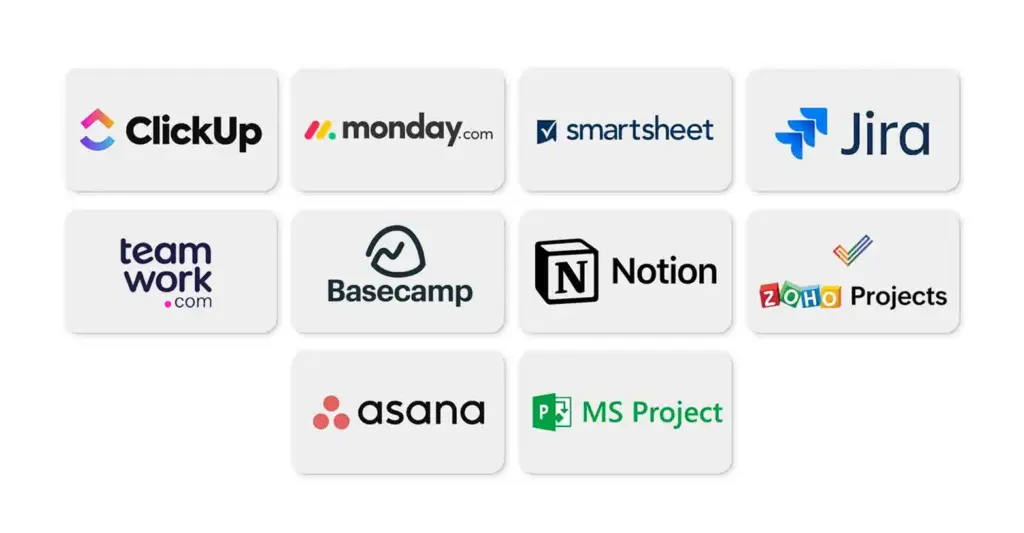
Equipping with the right tools can help you lead in the right direction. Here are the top 9 project management tools you can use in 2025.
1. Asana
Asana’s user-friendly design suits SaaS teams managing product launches and customer success, offering seamless integrations with Slack.
2. Jira
Jira excels in technical environments, providing sprint planning and bug tracking for SaaS development teams.
3. ClickUp
ClickUp’s AI features like task prediction, cater to growing firms. Gartner’s 2025 SaaS Trends Report notes 73% of SaaS companies use cloud-based tools.
4. Monday.com
Monday.com provides a visual project management interface that allows teams to plan, track, and collaborate on projects. Its flexibility caters to diverse workflows and team structures.
5. Smartsheet
Smartsheet combines the familiarity of spreadsheets with robust project management features, including automation and real-time collaboration, making it ideal for data-driven projects.
6. Teamwork
Teamwork is designed for client work management, offering features like time tracking, billing, and task management, which are particularly beneficial for service-based businesses.
7. Zoho Projects
Zoho Projects offers comprehensive project management tools, including task automation, time tracking, and Gantt charts, suitable for teams seeking an integrated solution.
8. Basecamp
Basecamp focuses on simplicity and team communication, providing tools for task assignments, messaging, and file sharing, making it a go-to for teams emphasizing collaboration.
9. Notion
Notion combines note-taking, databases, and task management into a single platform, allowing teams to customize their workspace to fit various project needs.
12 Common Mistakes SaaS Businesses Make (and How to Avoid Them)

Project management in SaaS is about managing change, scaling efficiently, and delivering real value to users. However, many SaaS teams fall into common traps that slow down growth and waste resources. Here are 12 frequent mistakes and how to sidestep them:
1. Lack of Clear Project Goals
The Mistake:
Teams dive into development without aligning on objectives or KPIs.
How to Avoid It:
Start every project with a clear scope, defined deliverables, and measurable goals. Use tools like OKRs to tie projects to business outcomes.
2. Poor Communication Across Teams
The Mistake:
Developers, marketers, and product managers operate in silos.
How to Avoid It:
Establish a shared communication hub (e.g., Slack, MS Teams) and hold regular cross-functional standups to ensure alignment.
3. Ignoring Customer Feedback Loops
The Mistake:
Building features without validating with real users.
How to Avoid It:
Integrate user feedback at every sprint. Use tools like Hotjar, Intercom, or customer interviews to guide product decisions.
4. Over-Engineering the MVP
The Mistake:
Teams aim for perfection in the first release, delaying time-to-market.
How to Avoid It:
Focus on delivering a lean MVP that solves one core problem. Iterate based on user feedback.
5. Underestimating Project Timelines
The Mistake:
Setting unrealistic deadlines without factoring in technical debt or unforeseen issues.
How to Avoid It:
Use agile estimation techniques like planning poker and build buffer time into your timelines.
6. Lack of Prioritization
The Mistake:
Treating every task as equally urgent.
How to Avoid It:
Use frameworks like MoSCoW (Must-have, Should-have, Could-have, Won’t-have) or RICE scoring to prioritize features and tasks.
7. No Defined Roles or Ownership
The Mistake:
Ambiguity around who’s responsible for what causes bottlenecks.
How to Avoid It:
Clearly assign roles using RACI charts (Responsible, Accountable, Consulted, Informed).
8. Not Adapting to Change
The Mistake:
Rigid plans that don’t evolve with shifting business needs.
How to Avoid It:
Embrace agile methodologies that promote flexibility and iterative planning.
9. Inadequate Use of Project Management Tools
The Mistake:
Relying on spreadsheets or fragmented tools.
How to Avoid It:
Adopt a robust platform like ClickUp, Asana, or Wrike that centralizes workflows, documentation, and communication.
10. Skipping Post-Project Reviews
The Mistake:
Finishing a project and immediately jumping to the next without reflection.
How to Avoid It:
Conduct regular retrospectives to analyze what worked, what didn’t, and how to improve next time.
11. Overcomplicating Processes
The Mistake:
Complex workflows confuse teams and stall progress.
How to Avoid It:
Streamline project phases and keep processes intuitive. According to Forrester’s 2024 study, 45% of SaaS projects fail due to poor adoption that is often rooted in overly complex systems.
12. Neglecting Training
The Mistake:
Teams are handed tools but not shown how to use them effectively.
How to Avoid It:
Prioritize onboarding and ongoing training. Demonstrating how tools solve real problems boosts confidence, speeds adoption, and ensures your investment pays off.
Project Management Trends: What’s Coming in 2026?

As technology evolves and work dynamics shift, staying ahead means understanding the trends shaping how projects are planned, executed, and delivered. Here’s what to expect in project management for 2025.
1. AI-Driven Automation
AI will revolutionize project management, with Statista forecasting 25% growth in tools offering predictive scheduling by 2025.
2. Remote-First Collaboration
Distributed SaaS teams will rely on platforms optimized for real-time, global coordination.
3. Customer Success Integration
Linking project milestones to churn metrics will provide deeper insights, enhancing strategic decision-making in 2025.
How to Start Project Management in 2026?
Project management is indispensable for SaaS businesses in 2025, delivering efficiency, cost control, and scalability. Follow these steps to get started today.
1. Conduct a Comprehensive Needs Assessment
Evaluate operational inefficiencies, such as delayed product rollouts or misaligned teams, using metrics like sprint completion rates or client feedback. This analysis informs a strategic approach to project management implementation.
2. Select an Appropriate Project Management Tool
Opt for a tool suited to SaaS environments, such as Asana for general coordination or Jira for technical teams. Conduct a pilot to confirm compatibility with existing systems, optimizing workflow efficiency.
3. Pilot a Tool
Test a solution like Asana or Jira with one team. McKinsey’s 2024 High-Performance Teams Report shows 80% of top firms use structured approaches.
4. Set Measurable Goals
Aim for tangible outcomes like a 20% faster launch cycle and track progress to build momentum.
5. Implement Thorough Team Training
Initiate formal training programs to ensure team proficiency with the selected tool. Emphasize benefits, including enhanced task oversight, to foster adoption across your SaaS organization.
6. Initiate a Phased Implementation Strategy
Launch a pilot program with a single team, such as your development unit, before enterprise-wide adoption. Refine processes based on performance data to ensure scalability and long-term viability.
Partner with BrainX Technologies for Expert Project Management!
For SaaS firms seeking expert project management in 2025, BrainX Technologies stands out. Specializing in customized software and consulting, BrainX streamlines workflows, integrates tools like Jira or Asana, and drives measurable growth.
Our proven expertise, reducing client costs and accelerating timelines makes us a trusted partner. Whether refining operations or scaling strategically, BrainX delivers results tailored to SaaS needs.
Visit brainxtech.com to discover how we can elevate your project management and fuel success in 2025.