

You are undertaking a significant project, but don't have sufficient skilled developers to address the workload or meet deadlines. The global demand for flexible hiring models is growing fast. According to industry research, the IT outsourcing market surpassed $92 billion in 2019 and is projected to reach $145 billion by 2027, growing at 4.6% annually. Even more striking, app outsourcing alone is expected to hit $121.60 billion by 2024. These numbers reflect the increasing shift toward models like IT staff augmentation, which offer speed, flexibility, and cost-efficiency at scale.
The situation is critical, and hiring full-time employees isn't feasible right now. Many businesses are experiencing this same reality. IT staff augmentation becomes a savior for businesses in such situations.
Outsourcing without structure can create more chaos than progress. That’s why having a Detailed IT Staff Augmentation Handbook is critical for companies scaling technical teams. This resource provides a clear framework for engaging external developers while maintaining control over quality, security, and communication.
Whether you’re offshoring to reduce costs or augmenting onshore for flexibility, the handbook outlines essential steps—from talent selection to onboarding processes and compliance checklists. It also helps define roles between in-house teams and augmented staff, ensuring smooth collaboration.
More importantly, in today’s regulatory landscape, the handbook should also address legal responsibilities like IP protection and data privacy—especially when operating under frameworks like GDPR.
Learn more about official GDPR compliance guidelines to understand data privacy requirements for outsourcing and team augmentation.
A Detailed IT Staff Augmentation Handbook doesn’t just guide operations; it builds confidence for stakeholders, speeds up hiring decisions, and reduces the risks often tied to rapid growth.
It's like that expert being available for your organization at just the right time without all the hassle of the recruitment process or having to permanently hire. It is a quick fix but also a flexible solution to achieve the top talent you need, to catch up on your projects, and also not burden your current team.
Read this guide on all about IT staff augmentation, how it works, and how it can give your business an edge.
What is IT staff augmentation?
IT staff augmentation is a flexible hiring approach where businesses bring in people from outside their organizations to supplement their in-house teams for a short period of time.
These are seasoned experts who come on a short-term contract to cater to the requirements of a project without the cost of hiring process or long-term employee benefit liabilities.
This is an ideal solution for businesses that may suddenly face a rise in workload or require specialized skills for a particular project. Efficient scaling of your workforce can avoid the delays and costs associated with permanent hiring.
For example, if you have three FinTech software development company developers but need to get five for your project. Then instead of putting further workload on your existing team, you could hire two seasoned professionals on a contractual basis This ensures that your deadline will be met without inconvenience.
IT staff augmentation allows you to adapt to the market while keeping the cost and risks down. In fact, this ensures you get the right talent at the right time for delivering high-quality results without long-term commitment.
Benefits of Staff Augmentation

IT staff augmentation is a smart solution for businesses wanting to scale effectively, cut costs, and keep up with the ever-changing demands of projects. This flexible approach brings plenty of benefits, making it an essential tool for success. Let’s dive into what makes IT staff augmentation so valuable.
1. Access to a Global Talent Pool
Businesses can bridge the gap between themselves and the best talent in the world through staff augmentation. Staff augmentation services open up opportunities for companies to utilize a large pool of specialized professionals with unique skills. Use this model to find the specific developers, engineers, or even consultants who will do your specific job right across town or around the globe. According to Statista, the global developer population exceeded 28 million in 2024, highlighting the scale of accessible talent worldwide.
2. Cost-Efficient Without Trade-Off
Full-time employees bring many overhead expenses to a company in the form of salaries, benefits, health insurance, and retirement plans. Staff augmentation using IT avoids these overhead costs since clients pay only for services delivered. It helps minimize overhead while availing talent.
3. Greater Flexibility
Staff augmentation process enables you to scale your team dynamically, ensuring alignment with the specific demands of your project. No long-term commitments or full-time hires—just the right people, in the right numbers, exactly when you need them.
4. Faster Time-to-Market
With pre-vetted, highly skilled professionals at your service, resource augmentation accelerates timelines. No time-consuming hiring process and onboarding is needed because the organization gets to deliver well within deadlines, reduces time to market; hence, stays competitive in product/service delivery.
5. Mitigated Project Risks
Every project comes with its own unique challenges and risks. The staff augmentation services that bring experienced professionals into an organization not only fill skill gaps but also analyze potential risks and implement effective solutions. This approach is proactive and ensures that projects are delivered successfully, on time, and within budget.
6. Trial Before Commitment
One of the most important advantages of staff augmentation is the chance to test professionals before making the final hiring decisions. This minimizes the chance of hiring some individual with inadequate skills, a bad work ethic, or just an unsuitable cultural fit with your team over time.
7. Keep Project Control
Unlike traditional outsourcing, IT staff augmentation allows businesses to retain full control over projects. With external professionals integrated directly into your team, decision-making and project visibility remain in-house, fostering seamless collaboration and accountability.
8. Increased Efficiency
Augmented teams are often highly specialized and focused on delivering results. This focus leads to improved efficiency, ensuring that projects are completed with precision and quality while optimizing resources.
9. Minimized Internal Disruptions
Introducing permanent hires with specialized skills can sometimes create tension among existing employees. Staff augmentation minimizes these concerns by offering a temporary yet effective solution, which allows internal teams to stay at higher morale and focus more on their core responsibilities.
10. Strategic Cost Savings
From saving recruitment costs to diminishing administrative overheads, staff augmentation is an effective cost-saving method for companies looking to maximize their expenses. This model ensures that resources are being transferred to where they are needed the most and not wasted on unnecessary costs.
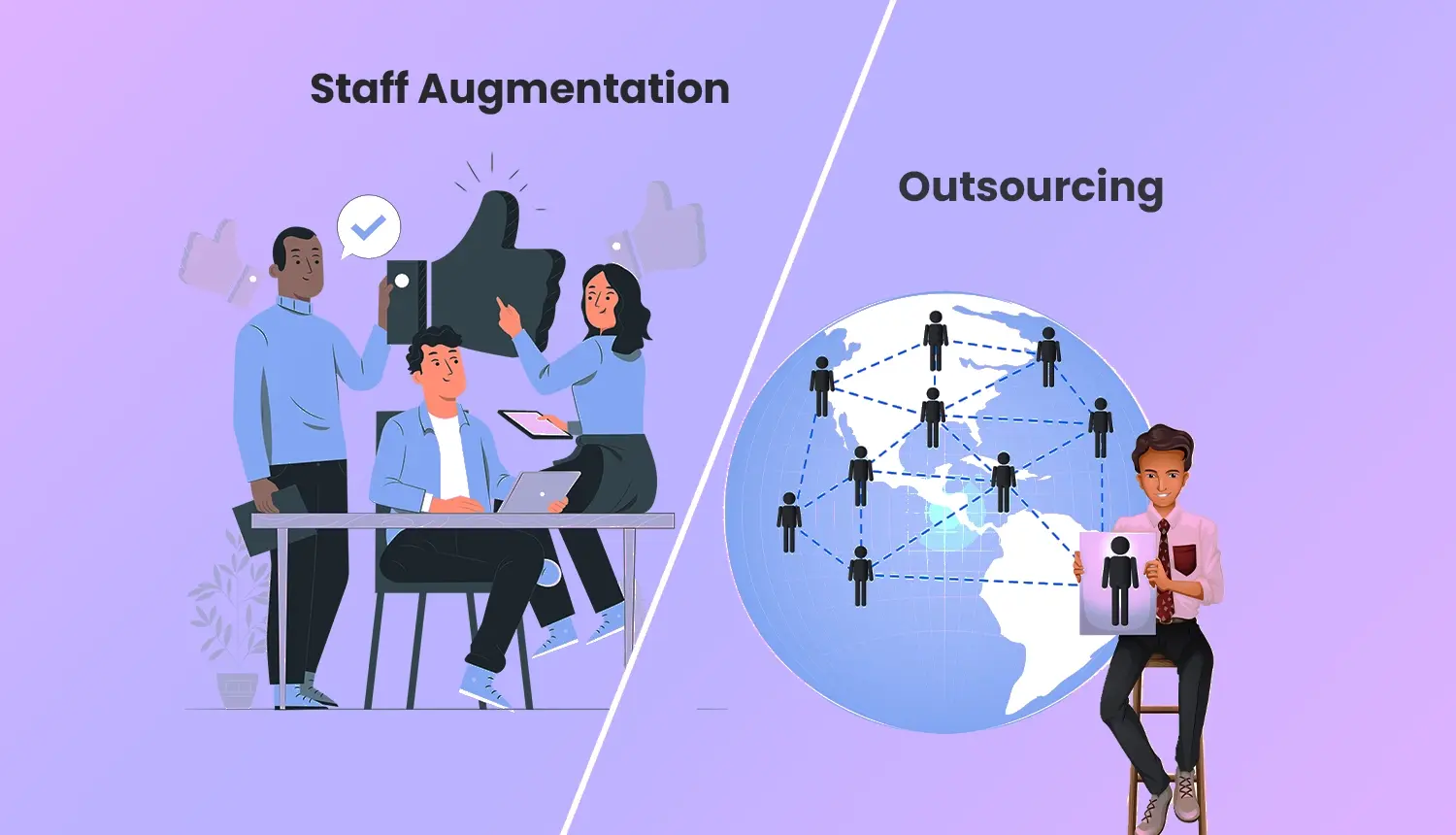
💡 Not sure whether to build in-house or outsource? Read our in-depth staff augmentation vs outsourcing comparison to make a confident, cost-effective decision.
Different Types of IT Staff Augmentation

1. Onshore (In-Country) Staff Augmentation
This model involves hiring IT professionals within Pakistan, ensuring alignment in language, culture, and time zones. It facilitates seamless communication and integration into existing teams.
Example:
A New York-based SaaS company supplements its development team with local IT consultants from San Francisco to expedite a new feature rollout, ensuring real-time collaboration during standard business hours.
2. Nearshore Staff Augmentation
In this approach, companies hire IT experts from neighboring countries with similar time zones and cultural backgrounds. While it offers cost advantages, it may require adjustments in communication strategies.
Example:
A U.S.-based SaaS firm collaborates with developers from Mexico to enhance its platform, coordinating tasks across similar time zones for efficient project completion.
3. Offshore Staff Augmentation
It’s a model that entails hiring professionals from distant countries, often with significant time zone differences. It provides access to a broader talent pool and can be cost-effective.
Example:
A SaaS company in Seattle hires developers from India for a complex project. The developers utilize their specific skills while managing the time difference by working flexible hours.
4. Project-Based Augmentation
This model is most suitable for projects with timelines wherein companies can hire experts temporarily to achieve project goals without long-term commitments.
Example:
A Chicago-based SaaS startup hires a dedicated cybersecurity team for the security audit of a new product launch, ensuring that all vulnerabilities are addressed before it goes live.
5. Skill-Based Augmentation
This emphasizes hiring professionals for specific tasks or projects with unique skill sets for particular tasks, and specialized needs are well catered to.
Example:
An Austin-based E-commerce SaaS company hires a data scientist trained in machine learning to develop a recommendation engine on their platform.
6. Time-Based Augmentation
Ideal for addressing temporary needs, this model involves hiring professionals for a set period, such as during peak seasons or to cover for employees on leave.
Example:
A SaaS provider in Boston augments its IT support team during the holiday season to handle increased user activity and ensure system stability.
7. Hybrid Augmentation
Hybrid augmentation combines elements of different augmentation models to tailor solutions to specific business needs, making it balanced between cost, expertise, and flexibility.
Example:
A multinational SaaS corporation with its headquarters in the U.S. relies on a combination of local project managers based in California. They hire offshore developers from Eastern Europe to manage costs while ensuring effective oversight of projects.
8. Commodity-Based Staff Augmentation
This model involves hiring personnel for non-specialized, repetitive tasks that don't require specific expertise. It's a cost-effective solution to increase capacity for basic, temporary tasks.
Example:
A SaaS company in Atlanta hires temporary data entry clerks to manage a large volume of information during a system upgrade. They also ensure that routine tasks are handled efficiently without burdening the core team.
Business Challenges Associated with Staff Augmentation

Although it offers a lot of advantages, there are several challenges when integrating augmented staff into existing teams.
1. Integration and Team Dynamics
Introducing external professionals into an already-built team can disrupt the existing workflows as well as interpersonal relationships. Ultimately, the success of staff augmentation depends on how well these external members gel with the in-house team. Different work cultures, communication skills, and different levels of familiarity with the company-specific process may lead to frustration or conflicts, which in turn may not enhance productivity.
2. Knowledge Transfer and Training
The benefit of filling gaps in skills will be partially counterbalanced by a learning curve about the specific systems, tools, and processes of the company. Staff augmentation requires time and resources for training and knowledge transfer to enable effective contributions by the augmented staff. This will temporarily offset any efficiency gains envisioned.
3. Quality Assurance
Adding other team members externally can be problematic in maintaining constant quality in deliverables. Augmented staff may possess different standards or approaches, hence leading to potential differences in quality of work delivered. Quality assurance robust processes and clearly defined guidelines would be necessary for maintaining the organization's standards.
4. Communication Barriers
Effective communication is the key to team success. When augmented staff are remote or from different cultural backgrounds, language barriers and time zone differences can hinder smooth communication. These challenges may lead to misunderstandings, delays, and reduced team cohesion.
5. Security and Confidentiality Risks
Granting access to sensitive company information by external personnel can create potential security risks. It is, therefore, very important that augmented staff are able to adhere to the company's data protection policies and maintain confidentiality. This calls for full security measures and probably further training of the external team members.
6. Dependency Concerns
Augmented staff reliance on critical functions can lead to dependency issues. If the external professionals leave the company unexpectedly, it may leave the company vulnerable with unmet project needs and a lack of necessary skills internally to continue the work seamlessly.
7. Cost Management
Resource augmentation is cost-effective but the cost can sometimes balloon out of proportion if not managed properly. Hourly wage rates for the highly specialized expertise will be high, and extending contracts beyond the scope of the initial engagement can be straining on budgets. Controlling costs is indispensable to make staff augmentation financially viable.
8. Legal and Compliance Issues
Engaging augmented staff requires addressing many legal and compliance considerations, such as employment laws, tax regulations, and contractual obligations. Non-compliance in these areas may result in legal issues and financial losses. Companies should ensure that all engagements comply with relevant laws and regulations.
9. Alignment with Company Culture
The augmented staff needs to be aligned culturally with the rest of the team in order to have a unified working environment. Disparities in work ethics, values, and corporate culture cause friction and a lower morale within the team. Assessing cultural fit at the time of selection would be ideal for bringing harmony to the team.
10. Performance Monitoring
It is hard to evaluate the augmented staff's performances, especially as they are distant. Therefore, it is important to clarify performance metrics with regular assessment protocol to ensure outside team members meet your expectations and actually contribute to helping the project reach a goal.
Staff Augmentation vs Traditional Hiring: What’s the Difference?
When resolving the dispute between staff augmentation vs traditional hiring, understanding the following differences can save businesses from making a wrong decision.
Staff Augmentation:
- Involves hiring external professionals for short-term purposes to supplement the core workforce for particular projects or durations.
- Highly flexible; an organization can ramp up or ramp down the number of employees required on a project without long-term contracts.
- Potentially more cost-effective for short-term needs; reduces costs of benefits, training, and long-term salaries.
- Fast onboarding; the external staff can be easily absorbed to meet immediate project requirements.
- Augmented staff work under the organization's direction, ensuring that they are working toward company objectives.
- Access to specialized skills and expertise that might not be in-house, so it can rapidly adapt to the needs of a project.
- External employees are likely less committed to the organization and therefore may influence group cohesion and longer-term project integrity.
- Reduces administrative responsibilities; external providers handle HR functions like payroll and benefits for augmented staff.
Traditional Hiring:
- Is about hiring core employees who are permanent additions to the organization.
- Not as flexible; a change in staff levels will have to await long recruitment or severance procedures that make it less responsive to changes in needs.
- Higher long-term costs including salaries, benefits, training, and other employee-related costs.
- It may take considerable time to find and train suitable candidates.
- Direct oversight and management of permanent staff, creating a deeper integration with company culture.
- Limited to the current set of skills for the employees on board; adding new skills involves training or hiring a new full-time employee, which takes time.
- The permanent employee will be more committed to the organization's long-term goals and provide a stable cohesive work environment.
- Increases administrative workload; the organization is responsible for all HR functions related to employee management.
- Involves observance of labor laws and regulations; the company has procedures for dealing with legal and compliance issues about permanent employees.
- Empowers easier cultural incorporation; permanent employees will easily assimilate into the company culture, which promotes teamwork and communication.
How to Choose the Right Partner
One must choose an ideal IT staff augmentation partner, as their success completely relies on those augmentations to ensure the objectives for your business.
Looking beyond staff augmentation? Here’s how to choose the right software development company for full-service projects and long-term tech partnerships.
A fitting choice will facilitate the experience and the flexibilities required with augmentations based on business goals. Follow these steps while selecting:
1. Assess Experience & Expertise
Ensure the partner has a proven track record in your industry and the specific technologies relevant to your projects. Experience in similar projects indicates their capability to meet your requirements.
2. Evaluate Communication Skills
Effective communication is vital. The partner should be responsive, transparent, and proficient in your preferred communication channels to ensure seamless collaboration.
3. Checking for Cultural Alignment
Cultural similarity eases augmentees' smoother absorption into a work team precursor to boosting productivity and working towards team unison.
4. Check the Testimonials of Clients and References
The experience of previous clients will give insight into the dependability, hard work, and quality of the partner.
5. Evaluate Flexibility and Scalability
Your partner must be able to scale up or down resources to meet your business’s requirements.
6. Know How They Recruit
A tough recruitment process guarantees that the professionals provided by your partner are competent and meet your standards.
7. Take Time Zone and Location into Account
Proximity has a big influence on communication and collaboration. Onshore, nearshore, or offshore is also up to your discretion depending on operational needs.
⚠️ Don’t let small mistakes cost you big. Learn what to avoid in our guide to outsourcing software development mistakes before signing your next contract.
Questions to Ask Before Staff Augmentation Partners Before Signing the Deal
- What is their experience in the industry?
- Can they provide case studies or references?
- How do they ensure the quality of your staff?
- What is their communication protocol?
- How do they handle confidentiality and data security?
- What are their pricing models?
- How do they manage time zone differences?
What Sets Great Augmentation Partners Apart?
- Consistent success in delivering quality projects on time and within budget.
- Access to a diverse range of skilled professionals to meet various project needs.
- Ability to quickly adjust to changing project requirements and scale resources accordingly.
- Clear and open communication regarding project status, challenges, and timelines.
- Strict adherence to data protection and confidentiality agreements.
- Shared values and work ethics that facilitate seamless integration with your team.
- Focus on understanding and meeting the specific needs and goals of your business.
How Does the Staff Augmentation Process Work?

When to Choose IT Staff Augmentation?
IT staff augmentation is a strategic approach that will help organizations to augment their in-house teams for temporary periods of time with professionally skilled people and allows flexibility without long-term commitments in traditional hiring.
Short-Term Projects
This is ideal for initiatives requiring specialized skills for a limited duration, allowing efficient project completion without permanent hires.
For a deeper look at how outsourcing can support these fast-moving projects, check out our article on the Benefits of Outsourcing App Development.
Skill Gaps
When your team lacks specific expertise, staff augmentation provides access to professionals with the necessary skills to bridge the gap.
Scalability Requirements
It is easy to scale up your labour force quickly and according to project requirements, avoiding the time wasted in traditional hiring processes.
Cost Control
Reduces the full-time employment-related costs, which include benefits and long-term salary payments.
Fast Time-to-Market
This integration of seasoned professionals accelerates the project time cycle and introduces products or services into the market faster.
Access to Experienced Professionals
Identifies risks and minimizes the chance of failure to make the project successful.
Resource Flexibility
Allows a dynamic size change and adjustment in the team as per the requirement of the project, hence ensuring operational efficiency.
Curious how this model works in real teams? See how IT staff augmentation accelerates software development for startups and scaling tech companies.
Scope of IT Staff Augmentation for Businesses
IT staff augmentation provides businesses with an opportunity to add temporary in-house teams with the help of special talent, making it flexible and full of expertise without the traditional long-term commitment of hiring. This is the best way by which most organizations can adapt to the dynamic market needs and technological advancements.
- Businesses can easily introduce professionals who are experts in cloud computing, data security or analytics. This ensures projects are executed with precision and creativity.
- Companies can easily adjust team sizes based on project needs, allowing them to adapt swiftly to market changes without the delays tied to traditional hiring processes.
- Through staff augmentation, companies can save on these overhead costs of full-time employment, including the provision of benefits and long-term salaries, which makes it cost-effective for short-term or specialized project needs.
- The use of experienced professionals will allow for faster project delivery, and through this, businesses can reach the market with products or services ahead of others.
- Augmented staff bring diverse experiences from various projects and companies, hence avoiding common pitfalls and adapting to changing project requirements.
Strategize Your Staff Augmentation with BrainX
BrainX Technologies is a top-end software development company that focuses on creating innovative digital solutions for all businesses.
“In addition to scaling dev teams, BrainX also supports CTO outsourcing strategies to help SaaS companies address executive-level tech challenges with flexibility and speed.”
We offer:
- Web Development: We are a team of web developers who create safe, scalable, and user-friendly web applications according to the needs of your business.
- Mobile App Development: We have expertise in developing high-performance mobile apps both on iOS and Android, guaranteeing exceptional functionality and user satisfaction.
- Artificial Intelligence Development: We use AI to innovate smart solutions driving business efficiency.
- Ecommerce web development: Customized online shops that will separate you from other competitors in this competitive market and are designed by our experts.
- Blockchain development: We present blockchain solutions through decentralized applications, and smart contracts for businesses to develop this emerging field.
- DevOps Services: Our DevOps experts streamline the software development process by maximizing the potential of DevOps technology.