

On-demand app development has reshaped how businesses and customers interact, offering real-time convenience, scalability, and efficiency. From ride-hailing and food delivery to healthcare and e-learning, these apps provide instant solutions that enhance engagement, reduce operational costs, and unlock new revenue streams. While challenges like high development costs and intense competition exist, with the right strategy, features, and technology stack, businesses can build scalable, user-centric apps that drive long-term growth.
Gone are those days when one needed to go out and buy even a single pen. But now everything in the world is just a tap away. Thanks to apps that have enabled users to order anything no matter the distance and pay online. Mobile apps took a major shift during the COVID pandemic when people preferred online shopping rather than stepping out and risking their lives.
From Uber to Foodpanda, to even the startups, all invested highly in their apps and got a fair share of their profit because millions of people used them. It has been believed that the demand for developing on-demand apps grows with each passing day. Developers seem to be enthusiastic about developing them due to their worldwide fame.
What is On-Demand App Development?
On-demand applications cater to the users' real-time needs, thereby smoothening the interactivity between customers and service providers. These apps include real-time tracking features and secured payment gateways to easily procure services or products.
Examples such as Uber, Ola, DoorDash, and Uber Eats for ridesharing and food delivery; as well as Netflix and Amazon Prime for streaming. On-demand applications use innovative technologies that enhance instant access to whatever the customers want. Generally, on-demand applications help customers to buy something instantly or to get some sort of service instantly.
Features of On-Demand Apps
The on-demand applications have revamped the availing of any service to be more convenient and an instant solution for them. Still, the success of these applications depends on some of the key features, which promise improvement in user experience, smoothing of processes, and assurance of efficiency. Let's explore must-have features that make on-demand apps indispensable in the fast-paced digital world.
Instant Messaging
Adding an in-app instant messaging feature during a custom on-demand application development can enhance user experience by offering a personal touch. It allows stakeholders to address queries, reduce miscommunication, and resolve issues like payment, order processing, and damaged products. It enables smart assistants to provide real-time data and point-by-point information.
Push Notifications
The app should engage users with product launches, discounts, and order status updates through push notifications. This feature keeps users informed about new arrivals, promotional offers, and service bookings, ensuring regular communication. Push notifications are vital for the success of marketing campaigns and expanding client engagement. They also retain customers and help elevate the open rate as well as user experience.
Reviews & Ratings
Allowing customers to share feedback and reviews helps service providers understand their performance and improve over time. This feature enables users to rate and review providers, guiding future customers in making informed decisions. Feedback not only enhances service quality but also boosts business growth by fostering continuous improvement.
Payment Gateways
On-demand apps should provide multiple secure payment options like internet banking, digital wallets, and credit or debit cards. Offering various payment methods enhances user convenience, boosts confidence, and ensures smooth transactions. For businesses, this reduces cart abandonment and increases successful transactions, attracting a broader, global customer base.
In-app Customer Support
On-demand apps benefit from robust customer support, ensuring users' queries are addressed promptly. Quick assistance reduces negative feedback, enhances service quality, and boosts customer satisfaction. Easy access to support fosters loyalty as customers feel confident knowing help is available whenever needed, improving their overall app experience.
Sign-up/Login
Registration should be quick and easy. It is the service provider that has to develop accounts using social networking profiles or mobile phone numbers. Users will be able to log in to use all the app's services with minimal information such as name, email ID, and phone number.
Order Tracking
Delivery apps for ride-hailing, food, groceries, or package services are expected to have real-time tracking features. It keeps customers informed about the location and progress of their orders. GPS monitoring reassures users, enhances transparency, and supports clear cancellation or change policies, ultimately improving service efficiency and customer satisfaction.
Wishlist
Adding a wishlist feature to your on-demand app encourages repeat visits and future purchases. Customers can save their favorite things for later, upgrading their shopping experience. This tool boosts engagement, as users often browse without immediate buying. With push notifications and newsletters, you can convert wishlists into actual sales.
Merits of On-Demand Apps
On-demand app development works equally effectively for customers, users, and business owners. We use them in our daily lives without even realizing their benefits and increasing needs. On-demand apps attain millions of users and help businesses earn millions of dollars in revenue due to their following benefits.
Boosts Profit
On-demand apps enable companies to expand their customer base and boost profits by offering instant convenience and satisfaction. They improve customer retention and reduce operational costs to drive high sales. Moreover, these apps simplify getting services for a better customer experience which results in more revenue and substantial customer loyalty.
Expand Customer Base
On-demand app development provides businesses with an effective means to broaden their market presence and grow their customer base. On-demand app developers provide flexible, efficient, and personalized services to increase customer satisfaction. They allow companies to provide services more effectively and conveniently. Such apps create new growth opportunities for businesses in this increasingly competitive market.
Highly Scalable
On-demand applications are highly scalable, adapting to business needs with ease. This means these platforms can quickly scale up to widen their services or accommodation for more people. Due to this flexibility, businesses can rapidly scale their offerings, thereby making entry into new markets and meeting the growing customer demands efficiently.
Real-Time Analytics
Only data-driven businesses can outperform their competitors in the market. On-demand apps help them by offering real-time analytics to give valuable insights into user activities, engagement, and performance. In turn, it helps companies leverage valuable data to make informed decisions, refine strategies, and tune operations to grow maximum impact and success.
Less Operational Complexities
On-demand apps reduce human interference and streamline tasks through automated systems. This reduces operational complexities, and overheads, and hence enables one to focus more on strategic growth. According to a report by Grand View Research, on-demand platforms can help reduce the execution time of some tasks by almost 20%, thus enhancing efficiency and productivity.
Increased Customer Engagement
On-demand apps boost customer engagement through intuitive interfaces and secure payment options, making it easy for users to book appointments or order products. This enhanced experience increases repeat business and customer lifetime value (CLV). Features like push notifications, personalized offers, and instant feedback keep customers informed and engaged.
Note:
Push notifications foster stronger relationships and improve user retention but overusing them can overwhelm users, leading to frustration and decreased retention.
Provide A Competitive Edge
On-demand apps help businesses reflect innovation, keeping them at pace. They enable businesses to use the latest technologies and contrast themselves in the market, satisfy their customers, and set the bar high among their competitors. This allows for flexible, convenient, and personalized experiences that help businesses bring new customers while continuing long-term growth.
Attract More Clients
On-demand apps attract more clients and investors by offering fresh revenue streams and innovative features. In-app purchases, premium options, and subscription models can enhance profitability and help businesses cater to a variety of consumer preferences. A well-designed app ensures customer loyalty and may even attract investors' interest in expansion.
Cost Effective
On-demand apps save a significant amount of cost for businesses as well as users. The solutions help reduce operational costs for the businesses—why on their part—eliminating the need to maintain a store with staff and other overheads. To customers, therefore, time and money will be saved, which could have been spent on further activities.
Meet Client's Goals
On-demand solutions precisely meet the demand for immediate gratification and convenience from customers of today. Frictionless, seamless experiences via on-demand apps allow service delivery to be over and above expectations. This adaptability ascertains customer satisfaction and develops loyalty, adding value to the overall user experience in a fast-moving market.
Demerits of On-Demand App Development
High Development Costs
On-demand application development requires great investment in the cases where business needs higher customization and integration with existing systems. High cost becomes a barrier to smaller companies by making it difficult to justify the expense. Proper budgeting and prioritization of features reduce costs but still allow for the delivery of a workable app that needs to be built for achieving business goals.
Intense Competition
The on-demand application market is very competitive, comprising an uncountable number of applications, each of which is struggling to get customers' attention. No business can easily distinguish its app from such competition. However, with unique features, rich customer experience, and strategic marketing, it becomes easier to outpace the competition.
Technical Complexity
On-demand app development requires specialized technical skills, from coding to integration. Most businesses find a suitable development partner who can handle these complexities. One needs to select an experienced team for development; it will save them from facing delays, cost overruns, and poor-quality apps to make sure the project is efficiently completed to a high standard.
Scalability Issues
Many businesses developing on-demand apps face scalability challenges. For instance, a food delivery app may crash during peak times, causing users to switch to competitors. To prevent this, load balancing, database optimization, and server capacity management are essential. Utilizing cloud platforms, including autoscaling features of AWS or Google Cloud prevent crashes as the users grow.
Lack of Technical Expertise
Without proper technical knowledge, businesses often encounter delays and rising costs when developing on-demand apps. Coding, debugging, and integrating new features are some of the prime aspects that go into creating seamless, user-friendly experiences. An amateur one results in awfully designed apps that fail to meet standards in the market. It was notably observed in the case of Zynga when it struggled to develop games on mobile.
Market Uncertainty
Gaining an in-depth understanding of the market trends and gaps is the key to achieving success with on-demand app development. Misjudging user needs can lead to unnecessary features or missed opportunities, increasing costs and development delays. An example is Google Glass, which failed due to a misjudgment of consumer demand and privacy concerns. Businesses must research target audiences to ensure their app addresses real market gaps and user preferences.
Budget Constraints
Developing an on-demand app requires many resources, with businesses usually miscalculating or underestimating the costs. Budget limitations can affect app quality, updates, and marketing efforts. Effective resource allocation for marketing, infrastructure, legal compliance, and customer support is critical. Without sufficient investment, app performance, user acquisition, and legal considerations may suffer, ultimately hindering the app’s success in a competitive landscape.
Types of On-Demand App Development

The on-demand app development has gradually become the most critical solution for most industries as demand increases with the earliest possible timelines. Such innovation does not only ease users' lives but also makes business processes simple. Different types of on-demand app development will be analyzed in this section on generating apps that cater to diverse consumer needs.
E-Learning Applications
Education has shifted to various virtual platforms, with individuals creating video tutorials and institutions embracing on-demand app development. Schools and universities now manage admissions, share syllabus materials, track attendance, and maintain records through apps. E-learning on-demand apps also allow students to instantly connect with facilitators, schedule one-on-one tutoring sessions, and access educational resources efficiently.
Financial Applications
It is an on-demand finance mobile application whereby users can be enabled to handle their financial activities in a variety of ways: budgeting, investment, transferring funds, and trading. The app shows advanced features, such as real-time account tracking and financial advice to each user separately, to increase client satisfaction and enhance their knowledge of finance.
Entertainment Applications
COVID-19 enhanced demand for the on-demand entertainment app Netflix since theaters were closed. These apps not only provided a platform for binge-watching but also expanded access to regional content, transcending geographical limits. With the decline of cable, streaming services like Disney+ and HBO Max dominate, making streaming apps a promising investment.
Transportation Applications
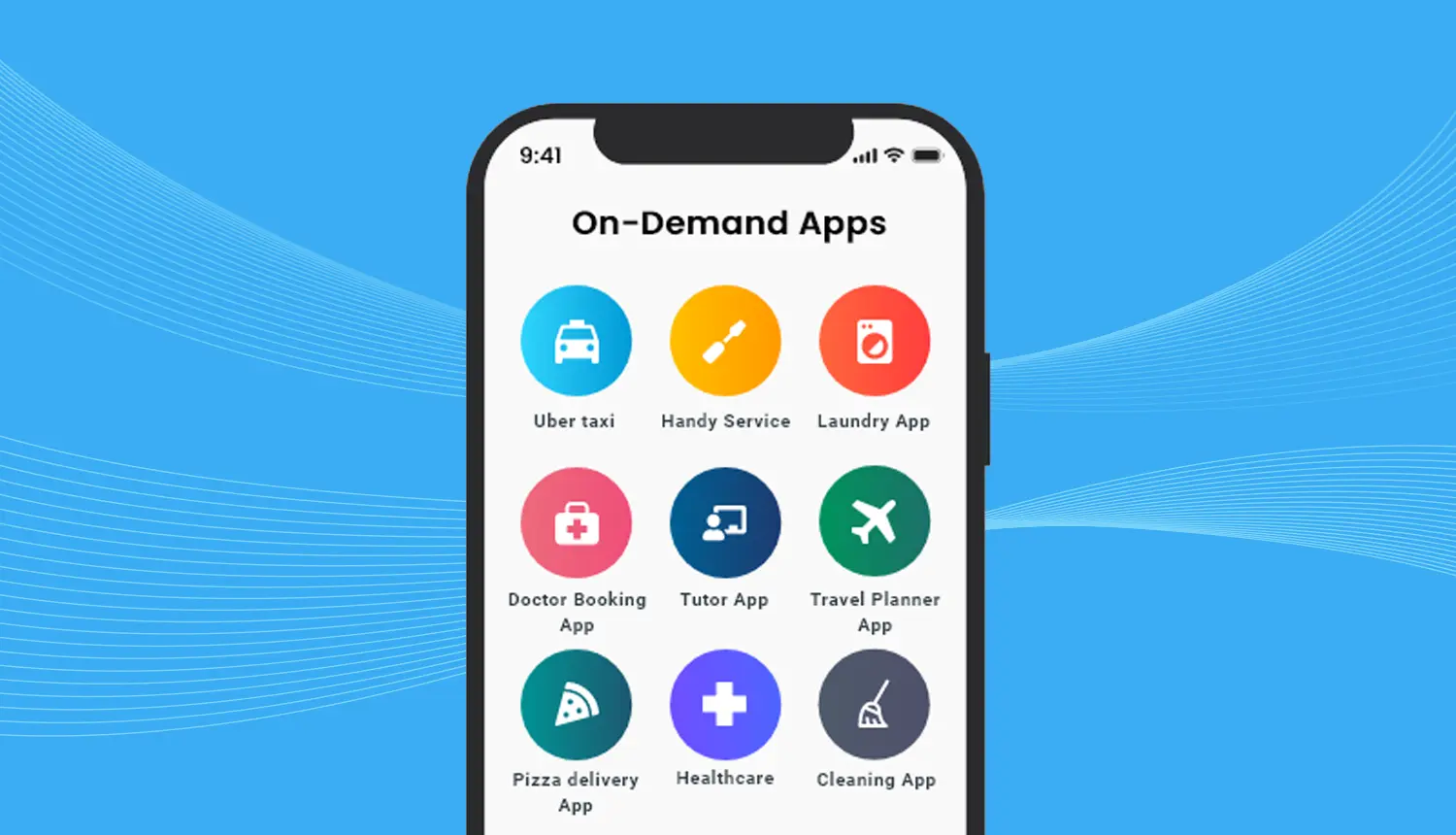
Uber is considered a pioneer in on-demand transport apps and has changed the whole system of the taxi world by minimizing the idle time of drivers and giving transparency in pricing to customers. The main appeal of this business model motivates entrepreneurs to create apps that bring together local cabs and other transportation options on a single platform. This benefits drivers and passengers by offering a transparent and fair billing system.
Food Delivery Applications
To help a restaurant expand its customer base, we developed an on-demand food delivery app focused on nutritious breakfast options using Flutter. The app offers weekly and monthly meal plans, order scheduling, and child-friendly options. With the rise of remote work, on-demand food apps like DoorDash and UberEats thrive, benefiting both restaurants and customers through convenience and cloud kitchens.
Home Service Provider Applications
On-demand home service apps have transformed urban access to services like plumbing and beauty by offering a unified platform for individual providers, with regulated pricing and expanded reach. Many app developers have developed Native Android and iOS apps featuring bidding, real-time chat, order management, and matchmaking algorithms. They connect users with service providers for tasks of all sizes, ensuring seamless service delivery.
Grocery Applications
These on-demand grocery apps changed the way one shopped during the COVID-19 pandemic, making everything accessible from home. For consumers, Instacart, Big Basket, and Shipt made it very easy to shop from the comfort of their homes while, for the sellers, it became a sure platform to increase their sales.
Healthcare/ Fitness Applications
On-demand apps have transformed healthcare by way of doctor appointments, online consultations, and personalized health monitoring for diabetes and blood pressure management. Fitness enthusiasts use home-based exercises assisted by digital devices. Regular physical activity among users of fitness apps can be increased, along with an increased frequency of exercise and walking, thereby affecting an improvement in their well-being.
On-Demand App Models
They operate several different ways of business models, which consist of P2P, B2C, and B2B. Every one of them carries out the needs of various consumers ranging from the relationship of an individual with a business to contact with a corporation.
Person-to-Person (P2P) Apps
P2P on-demand applications connect individual providers to customers. Providers create profiles, list services, and price them; customers only need to pick services that solve their particular needs. Examples range from car rides like Uber and Lyft to anything from errands, like TaskRabbit, directly from a person to the user.
Business-to-Consumer (B2C) Apps
B2C on-demand applications allow businesses to be in direct contact with their consumers. These on-demand platforms provide a facility where companies can put up their services and prices for display, making it easier for users to gain access and buy services. Classic examples include well-known services: Postmates, Grubhub, and Instacart-all of these come in food delivery and groceries.
Business-to-Business (B2B) Apps
B2B on-demand applications facilitate businesses to connect with other businesses for miscellaneous services. Examples include Upwork, Fiverr, Freelancer, and others offering on-demand businesses freelance and professional services.
Guide to On Demand App Development Process
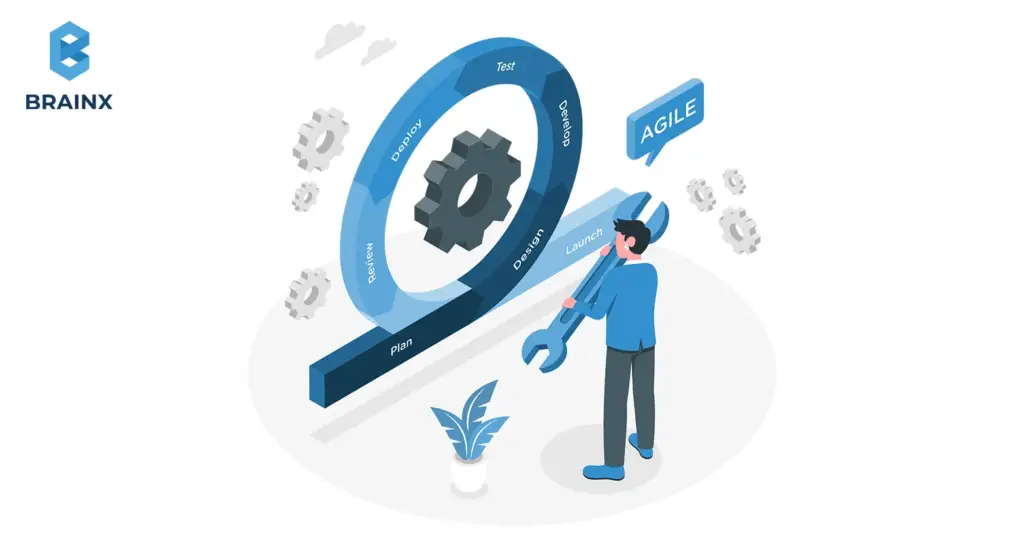
With on-demand applications, there is a surefire way to improve customer retention and business scaling, especially by connecting active users directly to services through their smartphones. Building a successful solution requires strategic planning, precise execution, and thorough testing of every phase from ideation to deployment and maintenance. In this section of our guide, we will discuss key steps that one can take to navigate the process effectively to realize a high-performing on-demand service app.
Ideation
It starts with the definition of the purpose and identification of the target audience for an on-demand app. First of all, it takes place through collaborative brainstorming in which the team of experts communicates to outline what people's needs have not yet been satisfied and what could answer those needs. One must focus on the changes to let the app quickly resolve the problems.
Market Research
One must begin by conducting thorough market research to identify trends, analyze competitors, and uncover opportunities for a strong value proposition. This process ensures that the app fills a market gap. It also involves gathering early customer feedback to confirm the concept meets client expectations and aligning the product idea with market needs from the start.
Strategic Planning
The planning stage includes distillation of product concept, development strategy development, and evaluation of technological risks.
We detail the product specifications, identify necessary resources, and set a development timeline. Once complete, we’ll share the specifications and timeline with you for approval before moving forward with the project.
Prototyping & Designing
The prototypes are then tested on real users to receive feedback and fixes to optimize the design before it goes to development. This will make your product user-friendly and aesthetically pleasing. The professional UI/UX designers in our team focus on creating designs that not only look good but also consider the experience of the user. There will be permission to test interactive prototypes, fine-tune the design, and ensure smooth transitions with intuitive navigation.
Product Development
Next, we begin development, including backend coding, frontend implementation, and third-party API integration. Best practices ensure scalability, maintainability, and security within the entire development cycle of the application. We work on an Agile sprint-based development methodology where iterative builds are made at the end of each sprint.
Quality Testing
We then follow up with a thorough quality assurance and testing process to ensure that the final product meets the requirements of all the expectations and works smoothly. We have both manual and automated testing processes to catch bugs, errors, and usability. By prioritizing quality from the start, we deliver a polished, reliable product tailored to your audience, minimizing risks and future complications.
Market Launch
The product's market launch marks the seventh step in the development process. After thorough testing and bug fixes, the app is ready for deployment on platforms like the Apple App Store and Google Play. Following store guidelines and implementing ASO techniques guarantee that the app will appear in front of every potential user.
Ongoing Maintenance
Regular maintenance and upgrading are necessary to enable your product to stay relevant and competitive. This includes bug fixing, the implementation of new features, and user feedback. We ensure that your product will evolve with the constantly changing needs of users and ensure it is still functional ahead in the market through continuous listening to customer insights and market trends. Despite being the final stage, our commitment to your product's success is ongoing.
Let BrainX Empower Your Business with Custom On Demand App Development
Choose BrainX as your trusted partner for on-demand app development, and experience the following benefits:
Comprehensive Expertise
We have immense experience in bringing ideas into digital products in the industries of healthcare, education, real estate, and hundreds more.
Innovative Solutions
Our team develops tailored software solutions to improve user experiences and optimize operations for your on-demand app development.
Proven Success
Projects like Yellper showcase our ability to deliver complete on-demand apps that meet client needs, from mobile and web.
End-to-End Support
Enjoy continuous support with quality assurance, engineering, and dedicated teams to ensure your app's success.